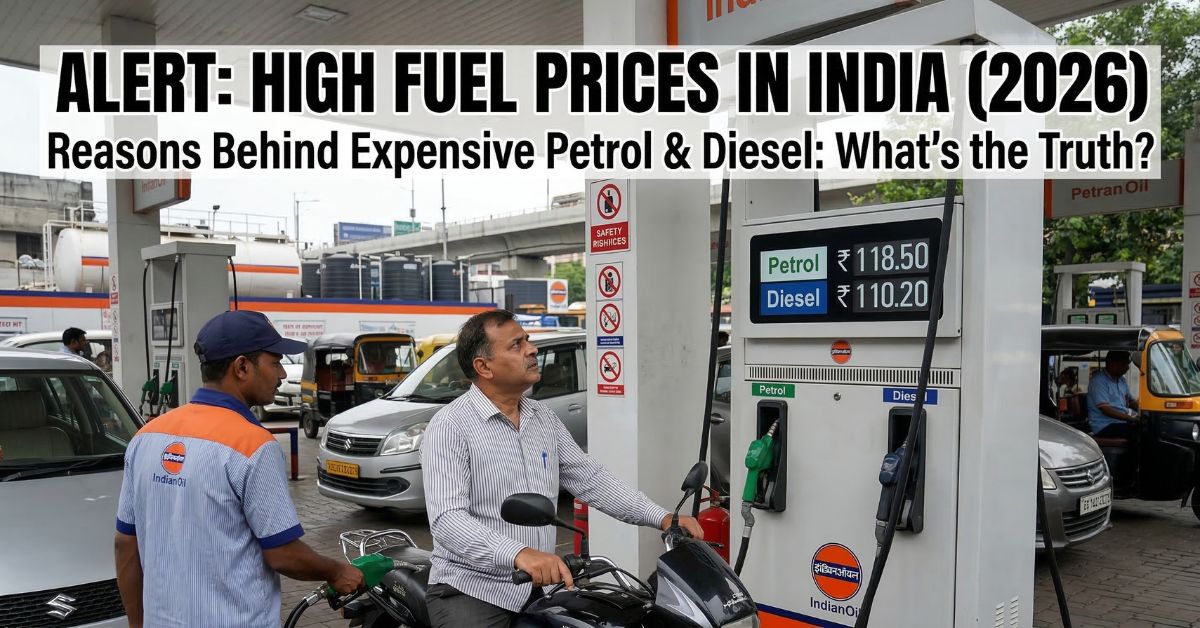
High Fuel Prices in India are once again a major concern for people across India. Even though petrol and diesel rates have not increased sharply in recent days, they are still at high levels, affecting daily life and expenses. In this article, we explain why petrol and diesel prices are high, what is happening globally, and how it impacts India.
Current High Fuel Prices in India in India
As of March 2026, fuel prices in India remain stable but expensive.
- Petrol in Delhi: around ₹94.77 per litre
- Diesel in Delhi: around ₹87.67 per litre
- Petrol in Mumbai: over ₹103 per litre
In cities like Bhopal, petrol prices are above ₹106 per litre, showing how expensive fuel has become in many states.
Even though prices have not increased recently, they are still high compared to past years.
Why Petrol and Diesel Prices Are High
1. Global Oil Crisis and Middle East Tensions
One of the biggest reasons is the ongoing global oil situation. Conflicts in the Middle East have disrupted supply routes like the Strait of Hormuz. This has pushed global crude oil prices higher.
India imports nearly 90% of its crude oil, so global price changes directly affect domestic fuel prices.
2. Heavy Dependence on Imports
India relies heavily on imported oil. When international prices increase, India has to pay more, which raises petrol and diesel prices in the country.
This makes fuel prices sensitive to global events, currency changes, and supply disruptions.
3. High Taxes by Central and State Governments
A major part of fuel price in India is taxes.
- Around 45%–55% of petrol and diesel price comes from taxes
- Both central excise duty and state VAT are included
This means even if crude oil prices fall, fuel prices may not reduce significantly.
4. Daily Price Revision System
Fuel prices in India are updated daily based on global crude oil rates. This system makes prices more transparent but also more sensitive to international changes.
5. Pressure on Oil Companies
Reports suggest that fuel retailers are facing low profit margins due to high crude costs. The government is still considering options but has not taken major action yet.
Impact of High Fuel Prices in India
High petrol and diesel rates affect almost every sector of the economy.
Increased Cost of Living
Transport becomes expensive, which increases prices of vegetables, food, and daily goods.
Impact on Businesses
Industries that depend on transport, like logistics and delivery, face higher costs.
Pressure on Farmers and Fishermen
Diesel is widely used in agriculture and fishing. Rising fuel costs increase production expenses and reduce profits.
Why Prices Are Not Increasing Further (For Now)
Despite global pressure, the government has maintained stable prices recently.
Officials say India has enough fuel stock and prices may not increase unless crude oil crosses $130 per barrel.
This is why prices are high but not rising sharply at the moment.
What Happens Next?
The future of petrol and diesel prices depends on global conditions.
- If the Middle East crisis continues, prices may rise
- If crude oil stabilizes, prices may remain steady
- Government may adjust taxes or subsidies if inflation increases
Experts warn that prolonged high oil prices can slow economic growth and increase inflation in India.
Why This Matters for Common People
Fuel prices directly affect everyone. Whether you travel daily, run a business, or buy groceries, high fuel rates increase overall expenses.
Read More : Petrol Diesel Price Today
This is why petrol and diesel prices are always a major topic in India.
FAQs (High Fuel Prices in India)
1. Why are petrol and diesel prices so high in India?
Prices are high due to global crude oil rates, high taxes, and India’s dependence on imports.
2. Are fuel prices increasing in 2026?
Currently, prices are stable but still high. Future changes depend on global oil markets.
3. Why are fuel prices different in every state?
Different states charge different VAT, which causes price differences.
4. Will petrol and diesel become cheaper soon?
Prices may reduce only if global crude oil prices fall or taxes are reduced.
5. How do high fuel prices affect common people?
They increase transport costs, food prices, and overall cost of living.