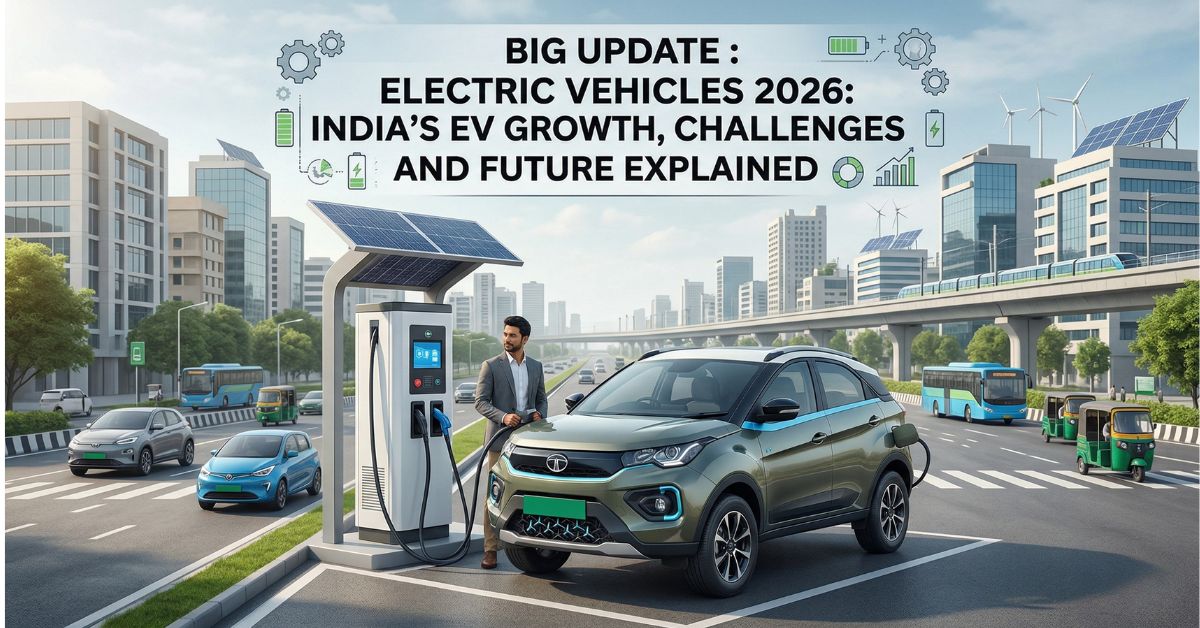
Electric Vehicles 2026 (EVs) are becoming one of the most important topics in India in 2026. From new car launches to government policies and rising fuel prices, everything is pushing people to consider electric mobility. But the story is not just about growth — it also includes challenges, changing trends, and future plans.
In this article, we explain what is happening in India’s EV market in 2026, why it matters, and what to expect next.
What Happened: EV Market Enters a New Electric Vehicles 2026
India’s electric vehicle sector is now moving from early adoption to mainstream growth. In 2025, EV sales saw strong growth, especially in passenger vehicles, with over 1.6 lakh units sold in just 11 months — a major increase compared to previous years .
By 2026, EVs are no longer seen as experimental or niche products. They are becoming a practical choice for many users across cities and even smaller towns .
At the same time, global EV adoption is also rising, with about one in four cars sold worldwide being electric, showing a strong global push toward clean mobility .
Key Trends Driving Electric Vehicles 2026 in India
Growth in Passenger EVs and New Launches
Car companies like Tata Motors, Mahindra, and global brands are launching more electric models. This has increased options for buyers and improved confidence in EV technology.
Electric Two-Wheelers Still Lead
Electric scooters and bikes remain the most popular EV segment in India. Their low cost and suitability for daily commuting make them ideal for Indian users .
Charging Infrastructure Expanding Fast
India’s charging network is growing quickly. Public charging stations increased significantly, reaching over 26,000 by early 2025, helping reduce range anxiety among users .
Government Support Continues
Schemes like FAME, PLI, and new EV policies are helping manufacturers and buyers. The government aims to make EVs more affordable and widely available.
Challenges: Why EV Growth Is Not Smooth
Despite strong growth, the EV journey in India is not without problems.
High Initial Cost
EVs are still expensive compared to petrol or diesel vehicles. Even though running costs are lower, the upfront price is a major concern for buyers.
Policy and Tax Changes
Changes in GST and subsidies sometimes affect demand. For example, lower taxes on petrol vehicles in 2025 made them temporarily more attractive, slowing EV sales .
Uneven Adoption Across Segments
EV adoption is not equal in all vehicle categories. While two-wheelers are growing fast, electric trucks and buses still face challenges like high cost and limited infrastructure .
Infrastructure Gaps
Although charging stations are increasing, they are still not enough, especially in rural and highway areas.
Why Electric Vehicles Matter for India
Electric vehicles are not just a trend — they are important for India’s future.
- Transport contributes about 12–13% of India’s carbon emissions
- EVs help reduce pollution and improve air quality
- They reduce dependence on imported fuel
- They support the country’s climate goals
India also wants to become a global EV manufacturing hub, creating jobs and boosting exports.
Government Targets and Future Plans
India has set a big goal:
Read More : Big Future News: Honda City Facelift 2027 Spotted: Expected Features, Price, Launch in India
30% of all new vehicles sold should be electric by 2030
To achieve this, the government is working on:
- Expanding charging infrastructure nationwide
- Supporting battery manufacturing and recycling
- Reducing dependence on imported materials like lithium
- Encouraging local production through schemes like PLI
Future policies (2026–2030 roadmap) will focus on scaling EV adoption, improving safety, and building a strong ecosystem .
Impact on Consumers and Industry
For Consumers
- More EV choices in different price ranges
- Lower fuel and maintenance costs
- Better charging availability over time
For Industry
- Huge investment opportunities
- Growth in startups and EV technology
- New jobs in manufacturing, batteries, and infrastructure
What Happens Next in 2026 and Beyond
Experts believe 2026 will be a turning point year.
- EV adoption is expected to increase further, especially in cars
- More global brands may enter the Indian market
- Charging infrastructure will continue expanding
- Policy support will remain crucial for long-term growth
However, success will depend on solving key issues like cost, infrastructure, and consumer awareness.
FAQ: Electric Vehicles 2026 in India
1. Are electric vehicles popular in India in 2026?
Yes, EVs are becoming more popular, especially in cities. Adoption is growing but still developing.
2. Which EV segment is growing the fastest?
Electric two-wheelers are the fastest-growing segment due to affordability and daily use.
3. Why are EVs important for India?
They reduce pollution, save fuel costs, and support India’s climate and energy goals.
4. What is the government target for EVs?
India aims for 30% of new vehicle sales to be electric by 2030.
5. What are the main problems with EV adoption?
High cost, limited charging infrastructure, and policy changes are key challenges.