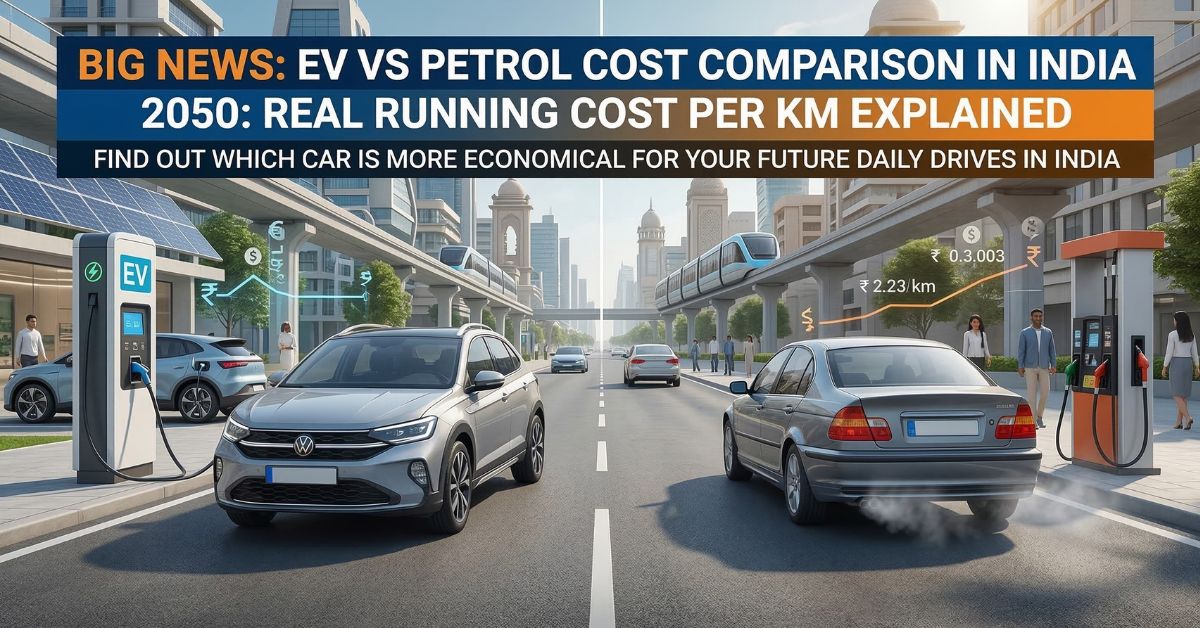
Electric vehicles EV vs Petrol Cost Comparison are becoming increasingly popular in India. Rising petrol prices and growing environmental awareness are pushing many car buyers to consider electric alternatives. But one key question remains: Is an EV actually cheaper than a petrol car in India?
This article explains the real cost comparison between EV and petrol vehicles, including running cost per kilometre, monthly fuel expenses, maintenance, and long-term savings. If you are planning to buy a new vehicle, this guide will help you understand the financial difference clearly.
Why EV vs Petrol Cost Comparison Is Trending
Fuel prices in India have been volatile in recent years, with petrol averaging around ₹100–₹110 per litre in many cities. Because of this, fuel expenses have become a major part of car ownership costs.
Electric vehicles, on the other hand, use electricity instead of petrol. Since electricity is cheaper than petrol, EVs often have a much lower running cost.
Running Cost Per Kilometre: EV vs Petrol Cost Comparison
The most common way to compare vehicles is by calculating cost per kilometre.
Typical estimates in India show a large difference between electric and petrol vehicles.
- Electric car: around ₹0.80 to ₹1.5 per km
- Petrol car: around ₹6 to ₹7 per km
This means an EV can cost almost 5–7 times less to run per kilometre than a petrol car.
The reason is simple: electricity used for charging is much cheaper than petrol fuel.
For example, if electricity costs about ₹8 per unit, and an EV runs around 6–8 km per unit, the cost per km comes close to ₹1–₹1.2.
A petrol car giving 15 km per litre at ₹100 per litre will cost roughly ₹6.5–₹7 per km.
Monthly Fuel Cost Comparison
To make this easier to understand, let’s look at a common example.
Suppose a driver travels 1,000 km per month.
- Petrol car fuel cost: about ₹6,000–₹7,000 per month
- EV charging cost: about ₹1,000–₹1,500 per month
This means drivers can save ₹5,000 or more every month by using an electric car instead of petrol.
Over a year, the savings can reach ₹40,000 to ₹60,000 depending on driving distance.
Maintenance Cost: EV vs Petrol Cost Comparison
Another big difference between the two vehicles is maintenance.
Petrol vehicles have many moving parts such as engine components, oil filters, and exhaust systems. These require regular servicing and replacement.
Electric vehicles have fewer moving parts and no engine oil. Because of this, maintenance costs are usually lower.
Typical yearly maintenance comparison:
- Petrol car service cost: around ₹7,500 per year
- EV service cost: around ₹6,000 per year (or even lower)
Over several years, these savings can add up significantly.
Upfront Cost: Where Petrol Cars Still Win
Although EV vs Petrol Cost Comparison are cheaper to run, they usually have higher upfront purchase prices.
Battery technology is still expensive, which increases the price of electric cars. However, government incentives and tax benefits are helping reduce the gap.
For example, buyers can claim income tax deductions of up to ₹1.5 lakh on interest paid for EV loans under Section 80EEB.
As EV production grows in India, experts expect prices to become closer to petrol vehicles in the near future.
Environmental Impact and Fuel Savings
Another major advantage of EVs is environmental impact.
Petrol cars produce carbon emissions and contribute to air pollution. EVs produce zero tailpipe emissions, which helps reduce pollution in cities.
In addition, switching to EVs can reduce India’s dependence on imported oil, which costs the country huge amounts each year.
When a Petrol Car Might Still Make Sense
Despite the cost benefits of EVs, petrol vehicles still have some advantages for certain users.
Petrol cars may be more suitable if:
- You drive very long distances regularly
- Charging infrastructure is limited in your area
- You want a lower initial purchase price
- You live in rural regions with fewer charging stations
However, for daily city commuting, EVs are often the more economical choice.
What Happens Next for EV Adoption in India
India is actively promoting electric mobility through policies, subsidies, and charging infrastructure expansion.
Read More : Petrol Diesel Price Today
Many state governments are introducing new EV policies to encourage adoption and improve charging availability. These initiatives aim to make EV ownership easier and more affordable in the coming years.
As battery costs decline and charging networks grow, EVs are expected to become even more common across India.
FAQ(EV vs Petrol Cost Comparison)
1. Is an EV cheaper than a petrol car in India?
Yes. EVs usually cost around ₹1–₹1.5 per km, while petrol cars cost ₹6–₹7 per km, making EVs significantly cheaper to run.
2. How much can you save with an EV in India?
If you drive about 1,000 km per month, you could save ₹4,000–₹6,000 monthly on fuel compared with a petrol car.
3. Why are EVs cheaper to run?
Electricity is cheaper than petrol, and EVs have fewer mechanical parts, which reduces maintenance costs.
4. Are EVs more expensive to buy?
Yes, EVs often have a higher upfront price because of battery costs, but government incentives and fuel savings can offset this over time.
5. Is EV charging expensive in India?
Home charging is usually affordable. Electricity costs around ₹6–₹9 per unit, making EV charging much cheaper than buying petrol.