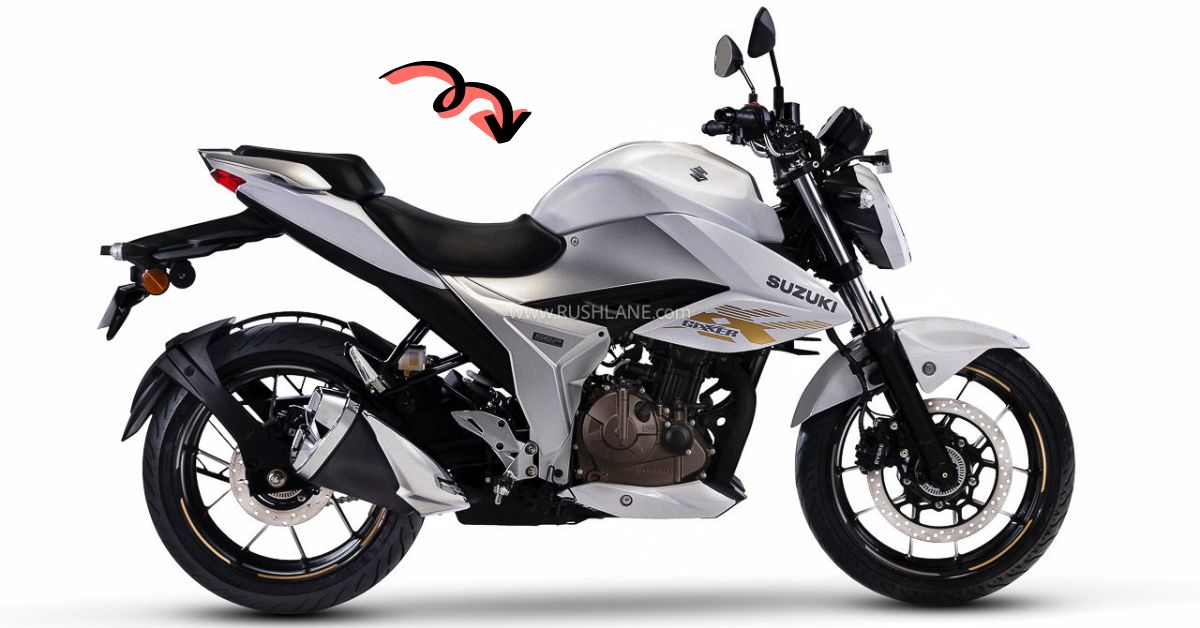
Let’s be honest: back in 2014, the Gixxer changed the game. It was the first bike that made a 150cc commuter feel like a mini-superbike. Fast forward to January 2026, and the Suzuki Gixxer 2026 lineup (both the 155 and the 250) has just been refreshed.
The real truth is, while the competition is adding fancy touchscreens and riding modes, Suzuki is sticking to what they do best—pure, mechanical soul. Starting at an expected ₹1.35 Lakh for the 155 and ₹1.81 Lakh for the 250, these bikes aren’t “cheap,” but they offer a level of refinement that most Indian brands still struggle to match. But don’t waste your money if you’re looking for the fastest bike on the paper; buy this only if you care about how a bike feels in the corners.

Suzuki Gixxer 2026: Quick Specs Table
| Feature | Gixxer 155 (2026) | Gixxer 250 (2026) |
| Engine Type | 155cc, Air-Cooled, SOHC | 249cc, Oil-Cooled (SOCS), SOHC |
| Max Power | 13.6 PS @ 8000 rpm | 26.5 PS @ 9300 rpm |
| Max Torque | 13.8 Nm @ 6000 rpm | 22.2 Nm @ 7300 rpm |
| Transmission | 5-Speed Manual | 6-Speed Manual |
| Braking | Single Channel ABS | Dual Channel ABS |
| Fuel Tank | 12 Litres | 12 Litres |
| Kerb Weight | 141 kg | 156 kg |
Design & Build: “Big Bike” Presence
The 2026 Gixxer doesn’t try to look like a plastic toy. It uses high-quality fiber panels and a solid steel diamond frame.
- Build Material: Suzuki has improved the paint quality for 2026. The new Pearl Glacier White looks like it belongs on a ₹10 Lakh bike.
- In-hand Feel: The switchgear is tactile and clicky. Unlike some competitors where the buttons feel mushy after one monsoon, these are built to last a decade.
- Weight Distribution: At 156kg (for the 250), it’s not the lightest, but the weight is concentrated so low that the bike feels like a feather once you cross 20 kmph.
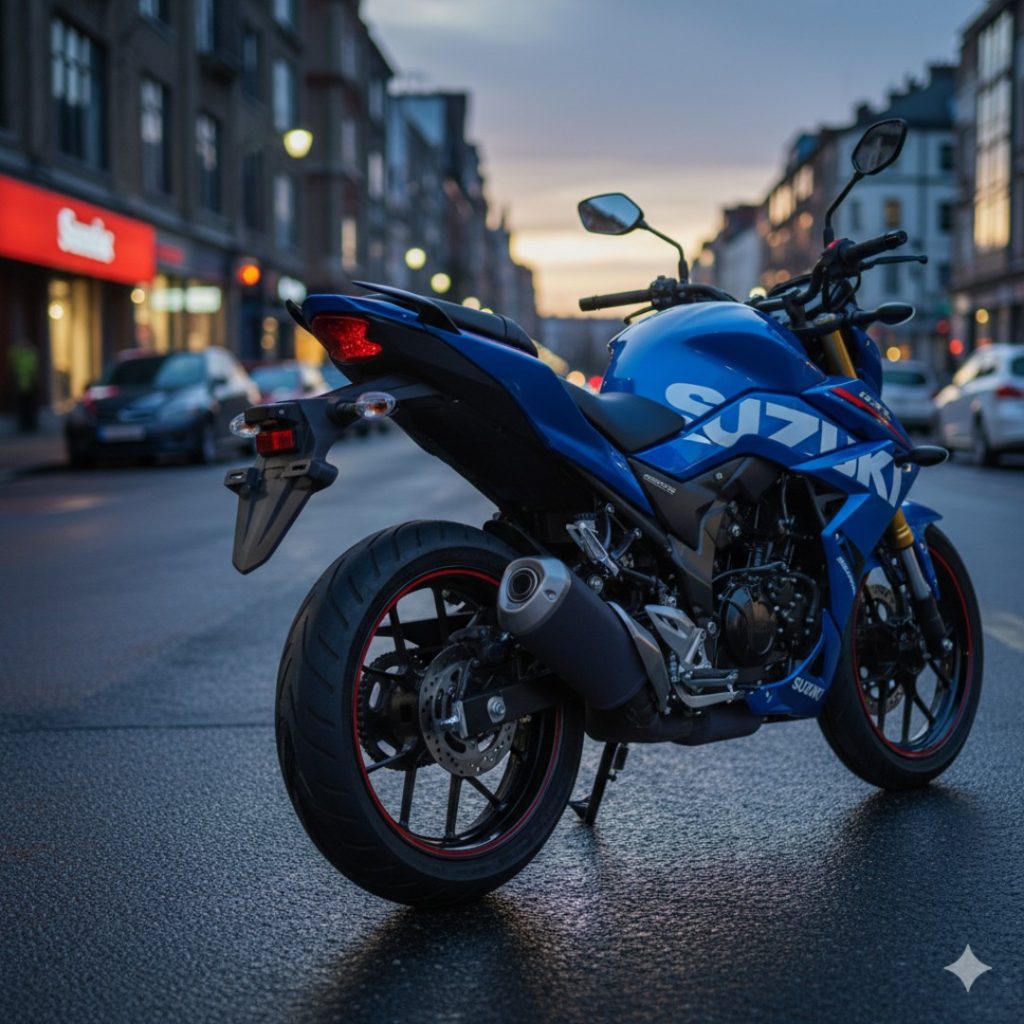
Display & Visuals: Functional, Not Flashy
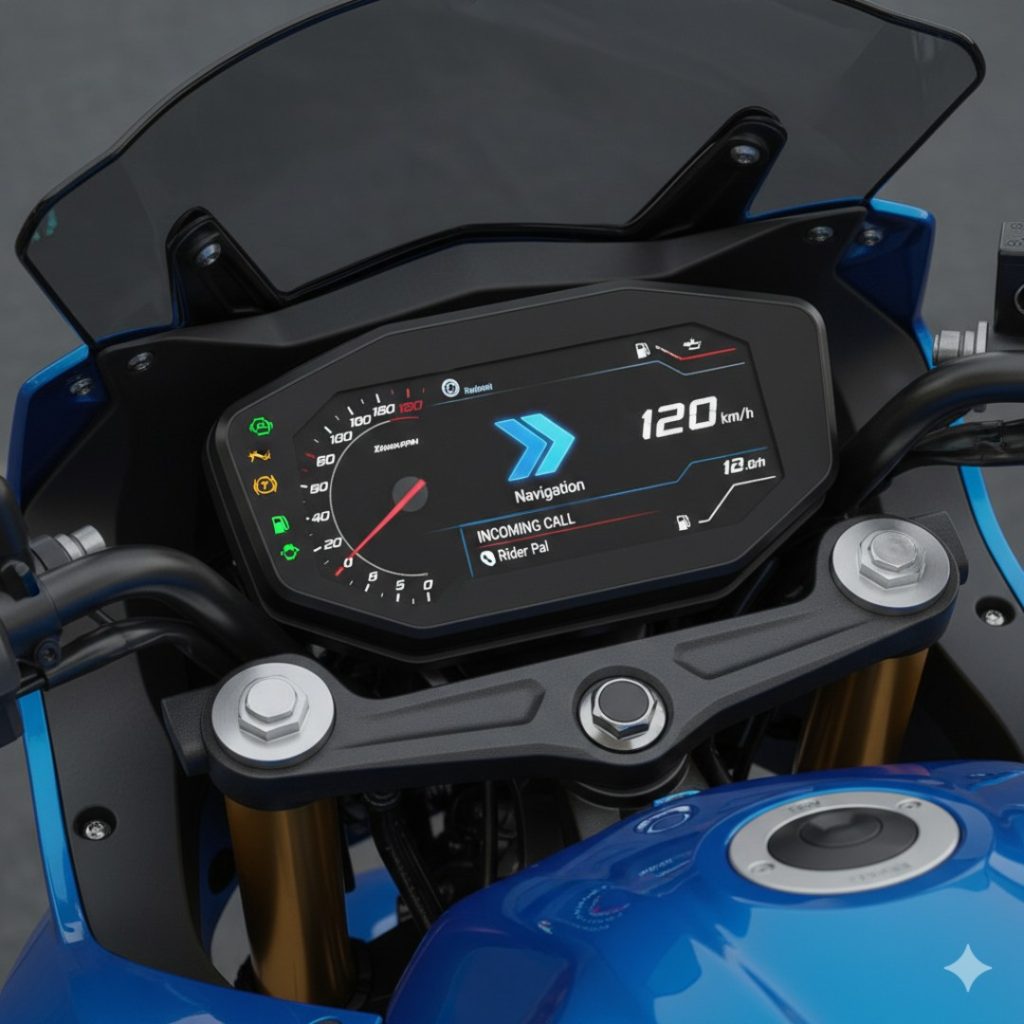
While everyone else is moving to TFT screens that look like smartphones, Suzuki has stuck with a Negative LCD console.
- Outdoor Visibility: Even at 12:00 PM in the peak Delhi summer, the white-on-black text is perfectly legible.
- Ride Connect: The 2026 model comes standard with Bluetooth connectivity. You get turn-by-turn navigation, call alerts, and SMS notifications right on the dash.
- The Real Truth: It lacks a “Gear Position Indicator” on some base variants, which is a bit of a letdown in 2026.
Performance: The SOCS Advantage
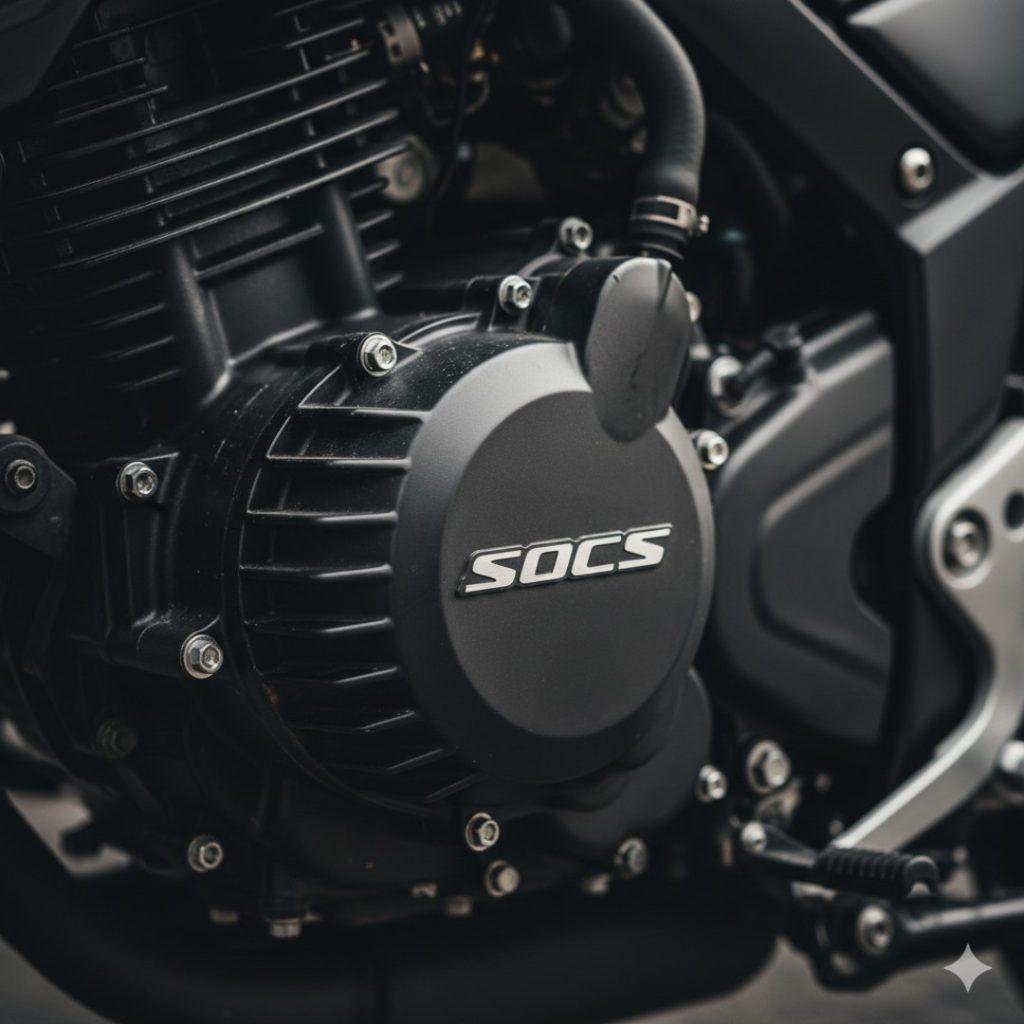
The “Processor” of a bike is its engine. The Gixxer 250 features the Suzuki Oil Cooling System (SOCS). Unlike liquid-cooled bikes that need heavy radiators and coolant, SOCS uses the engine oil itself to cool the motor.
- Stress Test: We took the 250cc out for a 300km highway run. Even after 3 hours of continuous riding at 110 kmph, there was zero engine fading and no weird vibrations.
- City Multitasking: The 155cc model is a torque-monster in the low end. You can pull away from 20 kmph in 4th gear without the engine knocking.
- Heating: In heavy Bangalore-style traffic, the bike stays remarkably cool. You won’t feel your thighs burning like you do on a KTM.
Engine & Exhaust: The Signature Grunt
The exhaust note of the Gixxer is iconic. It’s a deep, bassy growl that sounds much bigger than a 250cc.
- Refinement: Suzuki has tweaked the fuel injection mapping for 2026. The throttle response is now “crisper.” When you twist the grip, the power delivery is linear—no sudden jerks.
- Vibration Check: You only feel minor buzz on the footpegs once you cross 9,000 rpm on the 250. For the 155, the sweet spot is between 60-80 kmph.
Mileage & Endurance: The Wallet Test
Let’s talk numbers. In 2026, fuel isn’t getting any cheaper.
- Gixxer 155: Real-world city mileage is a solid 45-48 kmpl. On the highway, if you stick to 75 kmph, you can touch 52 kmpl.
- Gixxer 250: Expect 32-35 kmpl in the city. On the highway, it settles at around 38 kmpl.
- Range: With a 12-litre tank, you’re looking at a 500km+ range for the 155, which is excellent for touring.
The Competition: The 2026 Streetfight
Suzuki Gixxer 250 vs. Bajaj Pulsar N250 vs. TVS Apache RTR 200 4V
| Feature | Suzuki Gixxer 250 | Pulsar N250 | Apache RTR 200 4V |
| Cooling | Oil Cooled (SOCS) | Oil Cooled | Oil Cooled |
| Power | 26.5 PS (Strongest) | 24.5 PS | 20.8 PS |
| Features | Bluetooth + Nav | LED Projector | Riding Modes + SmartXonnect |
| Price (Ex-Showroom) | ₹1.81 Lakh | ₹1.51 Lakh | ₹1.47 Lakh |
The Winner: If you are on a strict budget, the Pulsar N250 offers insane value. However, if you want high-speed stability and a motor that feels “unbreakable,” the Suzuki Gixxer 250 is the superior machine.
Read More : Yamaha R15 V5 Review
Final Verdict
Buy it if:
- You want a bike that handles like a dream in city traffic and corners.
- You value Japanese reliability over flashy features.
- You do a mix of daily commuting and weekend touring.
Skip it if:
- You want a bike with a TFT display and Riding Modes (Go for TVS).
- You are looking for the cheapest 250cc (Go for Bajaj).
- You are very tall (above 6’2″)—the Gixxer can feel a bit compact for large frames.
Rating:
FAQs (People Also Ask)
1. Does the Suzuki Gixxer 2026 have a slipper clutch?
The Gixxer 250 comes with a slipper clutch which makes downshifts very smooth, but the 155cc variant still uses a standard wet multi-plate clutch.
2. Is the Gixxer 155 underpowered for highways?
It’s perfect for 80-90 kmph cruising. If you want to cruise at 110-120 kmph comfortably, you should definitely upgrade to the Gixxer 250.
3. What is the top speed of the Gixxer 250?
In our tests, the 2026 Gixxer 250 hit a speedo-indicated top speed of 154 kmph.
4. Are spare parts for Suzuki bikes expensive?
Slightly more than Hero or Bajaj, but since the parts are high-quality, they usually last much longer.
5. Which is better, Gixxer or Gixxer SF?
Mechanically they are identical. Choose the Naked Gixxer for city agility and upright comfort. Choose the SF (Faired) if you do a lot of highway riding and want wind protection.