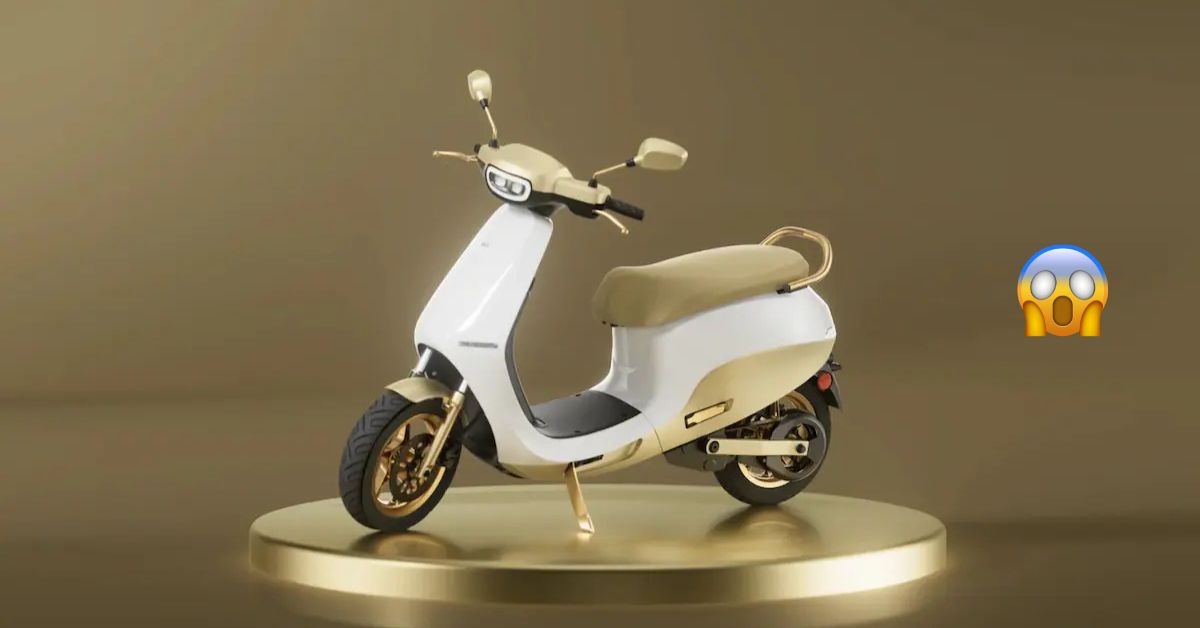
The Ola S1 Pro 2025 Electric Scooter Review is an exhaustive examination of the vehicle that has fundamentally redefined the electric two-wheeler market in India. The 2025 model year, often referred to in its latest Gen 3 iteration (and the subsequent Pro Plus variants), is not just a technological update; it represents a major structural and engineering specialization focusing on extreme range, performance reliability, and integrated digital safety features. Ola Electric’s aggressive vertical integration, including the development of its own battery cells (like the 4680/40680 Bharat cell in top variants), is the bedrock of the S1 Pro’s dominance.
This comprehensive review dissects the core specifications of the Gen 3 platform, evaluates the game-changing IDC and real-world ranges, details the advanced safety and digital features, and confirms the highly competitive price positioning that secures its high-performance market share.
Core Specs and Performance: The Mid-Drive Motor Advantage
The power and stability of the Ola S1 Pro 2025 Electric Scooter Review subject are derived from its specialized Gen 3 platform, which features a critical mechanical change.
Motor and Power Output
The latest S1 Pro Gen 3 features a Mid-Drive Permanent Magnet Synchronous (IPM) motor paired with a chain drive transmission, replacing the hub motor of the older generation. This mid-drive motor is a key specialization, offering superior heat management, better weight distribution, and a more consistent power delivery, which significantly enhances performance stability.
- Peak Power: The motor delivers a peak power of $11\text{ kW}$ (approximately $14.75\text{ bhp}$), making it one of the most powerful scooters in the segment. The top-tier S1 Pro Plus variants may feature a higher $13\text{ kW}$ motor (approx. $17.43\text{ bhp}$).
- Top Speed: The top speed for the standard S1 Pro Gen 3 (4 kWh) is officially $125\text{ kmph}$. The S1 Pro Plus can reach up to $141\text{ kmph}$, setting a benchmark in the Indian scooter market.
- Acceleration: The scooter boasts blistering acceleration, with the 0 to $40\text{ km/h}$ sprint completed in a claimed $2.7\text{ seconds}$ for the S1 Pro, and as low as $2.1\text{ seconds}$ for the higher-spec S1 Pro Plus.
Riding Modes and Customization
The S1 Pro offers four distinct riding modes—Eco, Normal, Sports, and Hyper (with Hyper reserved for maximum, short-burst performance). This specialization allows the rider to optimize power delivery and range based on the scenario, from maximum efficiency (Eco) to maximum speed (Hyper).
Range and Battery: The 4680 Bharat Cell Specialization
The most significant and defining specialization of the Ola S1 Pro 2025 Electric Scooter Review subject is its battery technology and the resulting range.
Battery Capacity and Claimed Range (IDC)
The S1 Pro is available in two main battery sizes in its standard Gen 3 form, while the flagship S1 Pro Plus uses advanced cell technology:
- S1 Pro 4 kWh: This is the core capacity variant, offering an IDC (Ideal Driving Cycle) range of $242\text{ km}$ on a single charge.
- S1 Pro Plus 5.3 kWh: The top-tier model utilizes Ola’s indigenously developed 40680 Bharat battery cells (large format cylindrical cells), pushing the battery specialization boundary with an immense IDC range of $320\text{ km}$ (or $324\text{ km}$ in some reports), positioning it as the longest-range scooter in India.
Real-World Range and Consistency
Real-world range is highly dependent on riding mode and style, but the Gen 3 platform has improved consistency:
- Eco Mode (User Reported): Riders can realistically expect to achieve a range of $180\text{ km}$ to $210\text{ km}$ in the more efficient Eco mode.
- Normal/Sport Mode (User Reported): In mixed or aggressive riding (Normal/Sport mode), the real range typically falls to $120\text{ km}$ to $160\text{ km}$ for the $4\text{ kWh}$ variant, which is still highly respectable for daily urban commuting.
Charging Time and Infrastructure
Charging is facilitated by a $750\text{ W}$ portable home charger. The charging times are:
- 0-80% (4 kWh): Approximately 4 hours 50 minutes.
- 0-100% (4 kWh): Approximately 6.5 hours.Ola’s Hypercharger network remains a crucial specialization, offering quick top-ups: adding approximately $50\text{ km}$ of range in just 15 minutes at Ola charging stations.
Riding Experience and Safety: Dual ABS and MoveOS
The Ola S1 Pro 2025 Electric Scooter Review subject offers a modern, engaging, and highly connected riding experience driven by its digital software and advanced safety hardware.
Read More : TVS NTORQ 125
Digital Cockpit and MoveOS 5/6
The central nervous system of the scooter is the 7-inch Touchscreen TFT display, which runs the proprietary MoveOS software (expected to be at version 5 or 6 in 2025). The screen allows for:
- In-Built Navigation: Using Ola Maps with real-time turn-by-turn directions.
- Music Control and Calls/SMS Alerts.
- Unique Features: Including predictive maintenance alerts, hill-hold assist (preventing backward roll on inclines), proximity lock/unlock, and the ‘Moods’ feature (customizable ambient sound profiles).
- OTA Updates: The software is continuously improved via Over-The-Air (OTA) updates, adding new features and fixing issues.
Safety and Braking Specialization
Safety is significantly enhanced on the top S1 Pro Plus variants with the introduction of Dual-Channel ABS (Anti-lock Braking System). This is a crucial specialization in the high-performance segment, providing superior braking control and stability. Standard features across the S1 Pro lineup include:
- Combined Braking System (CBS): Links front and rear disc brakes for better stopping control.
- All-LED Lighting: For superior visibility.
- Traction Control System (TCS): An electronic safety net (on Pro Plus variants) that prevents the rear wheel from slipping during aggressive acceleration.
Pros, Cons, and Price in India
The Ola S1 Pro 2025 Review confirms the scooter’s status as a technological leader, though the experience remains highly dependent on software and service consistency.
Pros (Advantages)
The major advantages are the segment-leading IDC range (up to $320\text{ km}$ on Pro Plus), the blistering acceleration and high top speed ($125\text{ kmph}$), the advanced Dual-Channel ABS on the top variants for enhanced safety, the Mid-Drive motor for improved thermal management and stability, and the large $34\text{-litre}$ under-seat storage capacity.
Cons (Drawbacks)
The primary drawbacks include the reputation for software glitches (though improved with Gen 3 and MoveOS updates), the high initial purchase price for the top-end models, the reliance on the touch screen for all controls (which can be distracting), and the historically inconsistent after-sales service experience, which is improving but remains a point of concern for buyers.
Expected Price in India
The pricing of the Ola S1 Pro 2025 is highly competitive, reflecting the advanced technology, safety, and battery specialization. The introductory prices for the Gen 3 models saw some discounts, but the current expected ex-showroom prices for the core variants are:
- S1 Pro Gen 3 (4 kWh): Approximately ₹1,45,000 to ₹1,50,447 (Ex-Showroom).
- S1 Pro Plus (4 kWh/Dual ABS): Approximately ₹1,55,000 to ₹1,60,227 (Ex-Showroom).
- S1 Pro Plus (5.3 kWh/320 km Range): Approximately ₹1,70,000 to ₹1,75,600 (Ex-Showroom).
The final On-Road Price in India for the top-end S1 Pro Plus (5.3 kWh) is estimated to range from ₹1.85 Lakh to ₹2.00 Lakh, depending on the city, local subsidies, and RTO charges, confirming its position as the premium, high-performance electric scooter choice.