Munger University in Bihar is set to begin a major digital transformation from March 2026. The move is expected to change how students apply for admission, attend classes, submit forms, and access academic records. The decision has drawn attention across the state, especially among students preparing for admissions and exams in the upcoming academic session.
In this article, we explain what “Munger University goes digital” really means, what changes students can expect, why the decision matters, and how it may impact higher education in Bihar.
What Happened: Munger University Announces Digital Shift
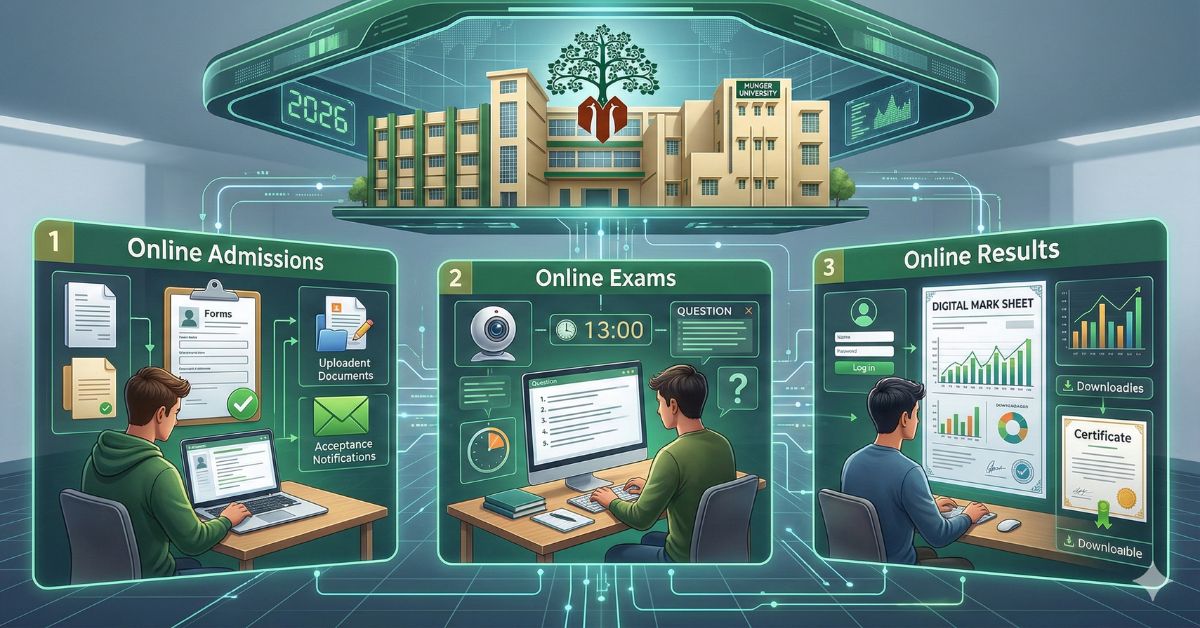
Munger University has announced that from March 2026, most of its academic and administrative processes will move to an online system. This includes admissions, examination forms, results, certificates, and internal communication between colleges and the university.
The digital transition is aimed at reducing paperwork and making processes more transparent and faster. Students will be able to access key services through an online portal instead of visiting the university office or affiliated colleges multiple times.
University officials have indicated that the digital platform will centralize data for students, faculty, and affiliated colleges. This means that academic records, attendance, and exam-related updates will be available in one place.
The announcement is seen as a step toward modernizing the university’s system and aligning it with other state and central universities that have already adopted digital platforms.
Key Changes from March 2026
From March 2026, students and colleges under Munger University are expected to follow new digital procedures. While detailed guidelines are likely to be issued closer to the implementation date, the broad changes include online processing and management.
Admissions are expected to be conducted fully online. Students will apply through a centralized portal, upload documents digitally, and track their application status in real time. This reduces the need to stand in long queues at colleges.
Examination-related activities will also shift online. Students will fill exam forms digitally, download admit cards from the website, and check results through the portal. Re-evaluation requests and other exam-related applications may also be processed online.
Administrative communication between affiliated colleges and the university will become digital. Notices, circulars, and official updates will be shared through an online dashboard.
This digital model aims to bring more clarity and reduce delays in academic processes.
Why Munger University Is Going Digital
The decision to go digital is part of a larger push for digital governance in education. Across India, universities are upgrading their systems to improve efficiency and reduce manual errors.
For years, many students have faced delays in receiving mark sheets, migration certificates, and other documents due to paperwork and administrative backlog. A digital system can reduce these issues by maintaining accurate electronic records.
There is also growing pressure to make higher education more transparent. Online systems allow students to track their application status, exam results, and grievances without depending entirely on physical visits.
The digital shift also supports the Government of India’s Digital India initiative, which promotes the use of technology in public services. By going digital, Munger University joins other institutions that are moving toward paperless administration.
In simple terms, the goal is to make processes faster, easier, and more reliable for students.
How Students Will Be Affected
For students, the biggest change will be convenience. Instead of traveling to the university or affiliated colleges for every small task, they will be able to complete most processes from home.
Online admissions will make it easier for students from rural areas to apply without repeated visits. They will need internet access and scanned copies of their documents. This may require some preparation, especially for students who are not used to online systems.
Exam updates will become more accessible. Students can check notices, download admit cards, and see results directly from the portal. This reduces confusion and dependence on notice boards.
However, the shift also means students must be careful while filling online forms. Mistakes in digital forms can create issues if not corrected on time. The university is expected to provide guidelines and help desks to assist students during the transition phase.
Overall, the digital model is likely to benefit students in the long run.
Impact on Affiliated Colleges
Munger University has several affiliated colleges across different districts. These colleges will also need to adapt to the new digital system.
College administration offices will have to update student records online and coordinate through the university’s digital portal. This may require staff training and system upgrades.
Digital attendance records and internal marks submission could become part of the new system. This can increase accountability and reduce discrepancies in academic records.
For colleges in remote areas, internet connectivity may be a challenge. Proper infrastructure will be necessary to ensure smooth implementation.
In the long term, digital systems can help colleges manage data more efficiently and reduce paperwork.
Background: Munger University and Its Role in Bihar
Munger University was established to provide higher education opportunities in the Munger region of Bihar. It oversees several undergraduate and postgraduate colleges across districts such as Munger, Lakhisarai, Jamui, Sheikhpura, and Khagaria.
The university plays an important role in shaping the academic future of thousands of students each year. Courses include arts, science, commerce, and vocational programs.
Like many state universities, Munger University has faced challenges related to exam delays, result processing, and administrative workload. Students have sometimes raised concerns about slow procedures and lack of timely updates.
The move toward digital systems appears to be a response to these challenges. By centralizing operations online, the university aims to improve efficiency and student satisfaction.
This digital transformation could mark a significant step in the university’s development journey.
Why This Matters for Higher Education in Bihar
The digital shift at Munger University is not just a local change. It reflects a broader trend in Bihar’s higher education system.
Several universities in the state are gradually adopting online systems for admissions, exams, and certificates. This is important because Bihar has a large student population and limited administrative resources.
Digital platforms can help reduce corruption risks, improve transparency, and speed up processes. Students get clear timelines and real-time updates.
For a state where many students come from rural backgrounds, digital access also opens new possibilities. It encourages digital literacy and helps students become more comfortable with technology.
If implemented effectively, Munger University’s digital move could set an example for other institutions in the region.
Official Updates and Implementation Plan
According to recent announcements, the digital system will be launched from March 2026. Detailed instructions for students and colleges are expected to be released before the start of the academic session.
The university is likely to provide a dedicated online portal where all services will be integrated. Students may be required to register with their basic details and create login credentials.
Training sessions or awareness programs may also be organized to guide students and staff on how to use the new system.
During the initial months, there could be technical issues or delays as the system stabilizes. However, universities that have adopted similar systems have reported improvements after the initial phase.
Students are advised to regularly check the official website of Munger University for the latest notifications.
What Happens Next
In the coming months, more details are expected about how the digital system will function. This may include step-by-step guides for admissions, exam registration, and document downloads.
Colleges will likely begin preparing their infrastructure and staff for the transition. Students planning to apply in the 2026 academic session should ensure they have access to required documents in digital format.
The success of this move will depend on proper implementation, technical support, and clear communication from the university.
If managed well, the digital transformation could improve efficiency, reduce delays, and make the university experience smoother for thousands of students.
Frequently Asked Questions (FAQs)
1. When will Munger University go digital?
Munger University is expected to implement its digital system from March 2026. More detailed instructions will be shared through official notifications.
2. Will admissions be fully online?
Yes, admissions are expected to be conducted through an online portal, where students can apply, upload documents, and track their status.
3. How will students get their exam results?
Students will be able to check and download their results directly from the university’s official website or digital portal.
4. Will offline services completely stop?
While the focus will be on digital services, some offline support may still be available, especially during the transition period.
5. What should students do to prepare?
Students should keep their documents ready in digital format, ensure they have access to the internet, and regularly check official updates from the university.