Let’s be honest: in India, the Creta isn’t just a car; it’s a status symbol. Whether you’re a business owner in Delhi or a family man in Bangalore, the Creta has been the “safe” choice for a decade. But the real truth is, the competition in 2026 is no longer just “trying” to catch up—they are at the door.
Starting at an expected price of ₹10.73 Lakh and going up to ₹21 Lakh for the top-end Turbo/Knight editions, the Hyundai Creta 2026 isn’t just a facelift—it’s a tech-overload. With over 70 variants and a massive focus on ADAS Level 2, Hyundai is making sure you don’t look at anything else. But wait, don’t waste your money if you’re expecting a “performance” SUV that handles like a BMW; this is a comfort king through and through.

Hyundai Creta 2026: Quick Specs Table
| Feature | Details |
| Engine Options | 1.5L Petrol (Naturally Aspirated), 1.5L Diesel, 1.5L Turbo Petrol |
| Max Power | 158 bhp (Turbo Petrol) |
| Transmission | 6-Speed MT, IVT (CVT), 7-Speed DCT, 6-Speed AT |
| Ground Clearance | 190 mm |
| Boot Space | 433 Litres |
| Safety Rating | 4 Star (Global NCAP – Anticipated) |
| Seating | 5 Seater |
Design & Build: Boldness Over Beauty?
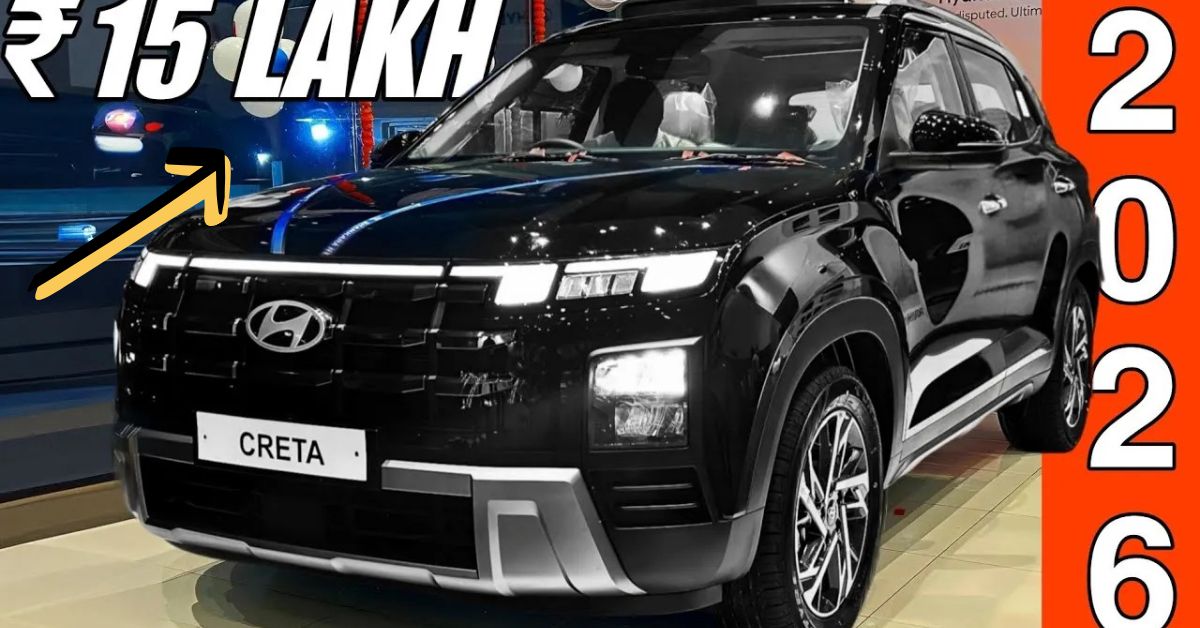
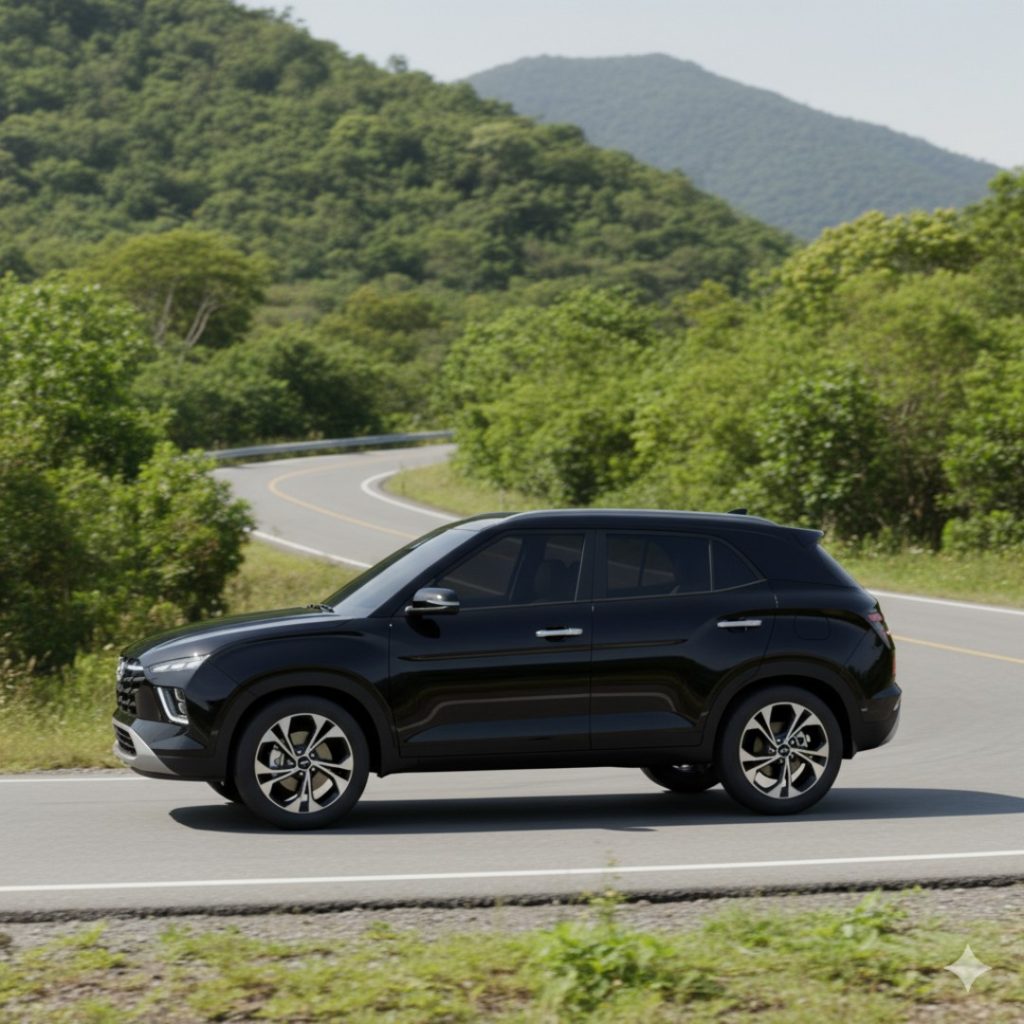
The 2026 Creta continues with its “Sensuous Sportiness” design language, but with a more aggressive twist. The front grille is now wider and features a Dark Chrome Parametric pattern that looks premium under streetlights.
- Build Material: Hyundai has used a mix of Advanced High Strength Steel (AHSS) to improve structural rigidity.
- In-hand Feel: The doors have a satisfying “thud” now, though it still doesn’t feel as tank-like as a Tata Harrier.
- Weight: It’s roughly 1,300 kg, making it heavy enough for highway stability but light enough for city flickability.
Display & Visuals: The Twin-Screen Masterclass
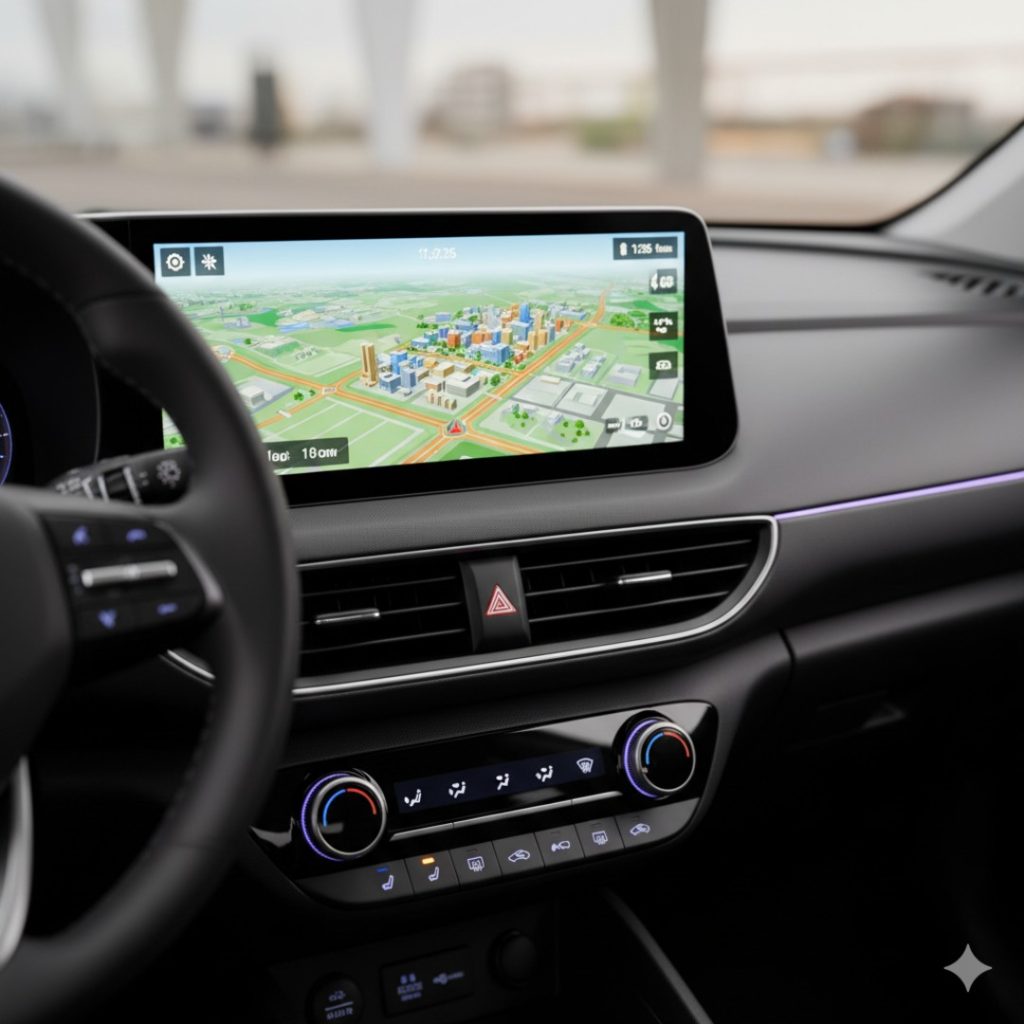
Step inside, and you’ll feel like you’ve entered a spaceship. The 2026 model features a dual 10.25-inch integrated screen setup that is curved toward the driver.
- Brightness: Peak brightness hits nearly 850 nits, meaning even in the harsh Rajasthan sun, you won’t struggle to see the maps.
- UI/UX: The interface is buttery smooth. There’s zero lag when switching between the 360-degree camera and Apple CarPlay.
- Outdoor Visibility: The matte-finish anti-glare coating on the screen is a life-saver for daytime driving.
Performance: Turbo Petrol vs. The World
If you are a speed enthusiast, the 1.5L Turbo Petrol (7-speed DCT) is the only engine you should care about. It pumps out 158 bhp and 253 Nm of torque.
- City Usage: In ‘Eco’ mode, the car is silent and smooth. It crawls through traffic effortlessly.
- Highway Usage: Switch to ‘Sport’ mode, and the DCT drops two gears instantly. 0-100 kmph comes in just 8.9 seconds.
- Heating/Lag: During our 2-hour bumper-to-bumper traffic stress test, the DCT did show minor heating warnings, which is typical for dry-clutch setups. If you live in a very congested city, the IVT (CVT) might actually be a more peaceful choice.
Engine & Interior: The Luxury Quotient
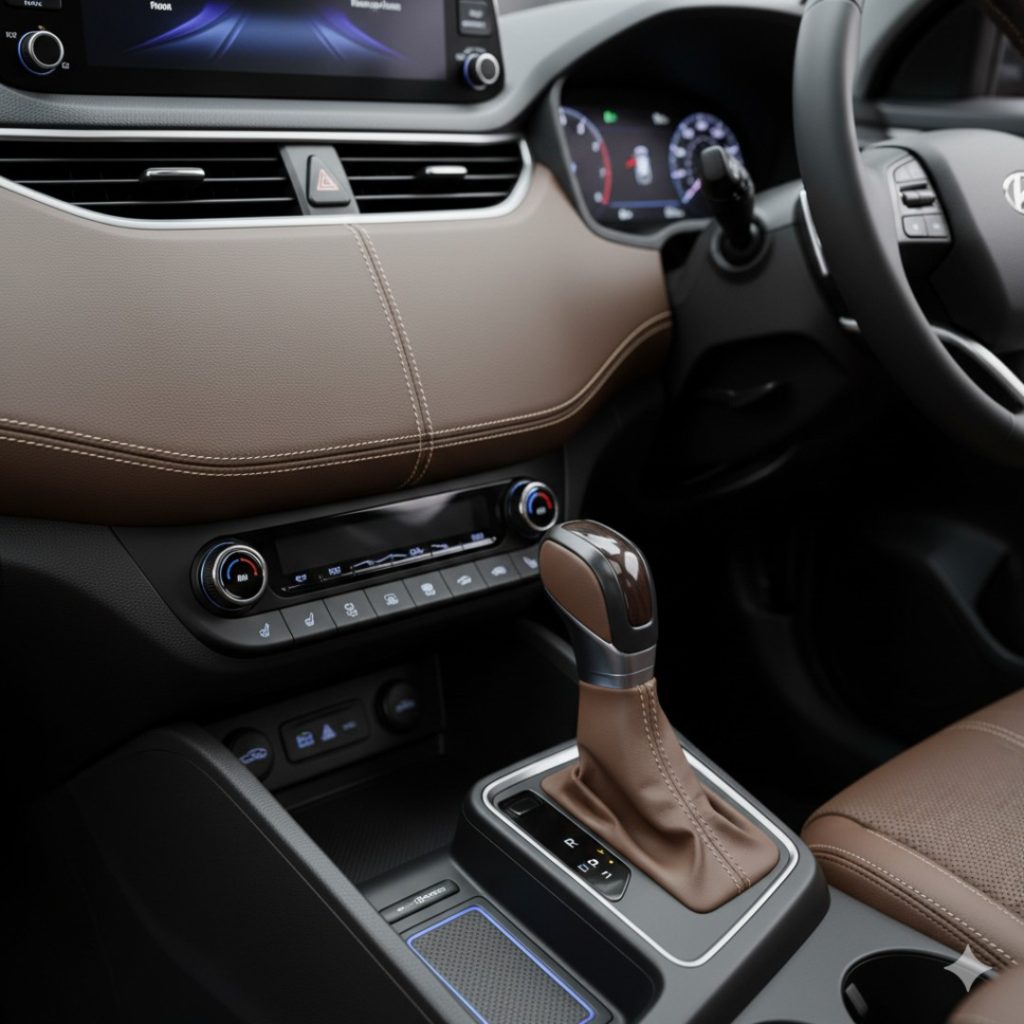
The real truth is that people buy the Creta for the experience inside. The 2026 model introduces Ventilated Seats (Front) that can cool down a sweaty back in less than 90 seconds.
- Engine Refinement: The Diesel remains the most refined in the segment. You can barely hear the engine idling inside the cabin.
- Audio: The 8-speaker Bose system is tuned for bass. Audiophiles might find it a bit “boomy,” but for the average Bollywood or Punjabi track, it’s perfect.
Battery & Endurance (The Real-World Fuel Test)
While not an EV (though a Creta Electric is coming), the fuel endurance of the ICE models is what matters to your wallet.
- Diesel AT: In the real world, expect 14-16 kmpl in the city and up to 21 kmpl on the highway.
- Turbo Petrol: Don’t be fooled by the brochure. If you drive with a heavy foot, it will drop to 8-9 kmpl. Drive sanely, and you get 12 kmpl.
- Tank Range: With a 50L tank, the Diesel can easily do a Delhi to Srinagar run on a single fill.
The Competition: 2026 SUV Battle
Hyundai Creta vs. Kia Seltos vs. Maruti Grand Vitara
| Feature | Hyundai Creta 2026 | Kia Seltos 2026 | Grand Vitara |
| Ride Quality | Soft & Plush | Stiff & Sporty | Balanced |
| Key Strength | Features & Resale | Design & DCT | Strong Hybrid (28 kmpl) |
| Safety | ADAS Level 2 | ADAS Level 2 | 6 Airbags (Standard) |
| Price (Top) | ₹21.5 Lakh | ₹21.0 Lakh | ₹20.5 Lakh |
The Winner: If you want fuel efficiency, buy the Grand Vitara Hybrid. But for the best overall package of luxury, features, and resale, the Creta 2026 is still the winner.
Read More : Mahindra XUV 7XO
Final Verdict
Buy it if:
- You love tech and features (Panoramic sunroof, 360-degree camera, Ventilated seats).
- You want the best resale value in India.
- You need a comfortable family car with a smooth automatic gearbox.
Skip it if:
- You want a 5-star GNCAP rating (Tata Nexon/Harrier are safer).
- You are on a budget—the top variants are now touching ₹25 Lakh on-road.
- You do a lot of off-roading (Wait for the Maruti Jimny or Thar Roxx).
Rating:
FAQs (People Also Ask)
1. Is the Hyundai Creta 2026 available in a Hybrid?
While rumors suggest a hybrid is coming late in 2026, currently, Hyundai is focusing on the 1.5L Turbo and the upcoming Creta EV.
2. What is the waiting period for the 2026 Creta?
For the top-end Knight Edition and Diesel AT, expect a waiting period of 3 to 5 months depending on your city.
3. Does the base model ‘E’ have safety features?
Yes! Hyundai now offers 6 Airbags, ESC, and All-wheel Disc Brakes as standard across all variants.
4. Is the ADAS Level 2 useful in Indian traffic?
It is excellent for highways with clear lane markings. However, in city traffic, the “Auto Emergency Braking” can be a bit intrusive—we recommend keeping it in ‘Warning Only’ mode for cities.
5. How is the Creta 2026 different from the 2024 model?
The 2026 model gets a refreshed lighting signature, upgraded ADAS sensors, and better cabin insulation for a quieter ride.