We often ignore the small noises our cars or bikes make. Maybe you think it’s just the rough Indian roads or the summer heat. But sometimes, your vehicle is trying to tell you something urgent.
Engine oil is like blood for your vehicle’s engine. It stops metal parts from rubbing against each other and helps keep the engine cool. If the oil level drops too low, the engine parts start grinding together. This can cause permanent damage that costs thousands of rupees to fix.
So, how do you know if your oil is low before it is too late? Here are the top signs you need to check your engine oil immediately.
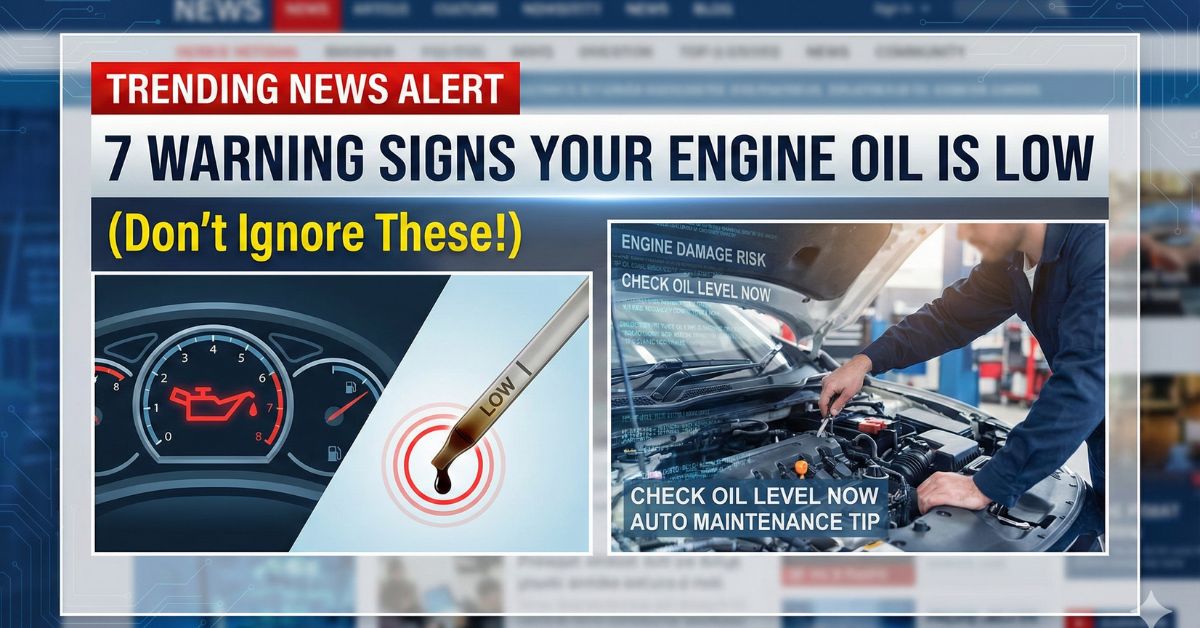
1. The Oil Pressure Warning Light (Aladdin’s Lamp)
The most obvious sign is on your dashboard. If you see a red or yellow symbol that looks like an old oil can (or Aladdin’s lamp) with a drop dripping from it, do not ignore it.
- What it means: Your oil pressure is too low to lubricate the engine properly.
- What to do: Stop the car or bike as soon as it is safe. Turn off the engine. Do not drive further until you check the oil level.
2. Strange Clunking or Knocking Noises
When there is enough oil, your engine runs smoothly and quietly. When oil is low, metal parts (like pistons and valves) start hitting each other without protection.
- The Sound: You might hear a loud “ticking,” “clanking,” or “knocking” sound coming from the engine.
- When it happens: It is usually louder when you start the engine or when you accelerate to overtake someone in traffic.
3. Burning Smell Inside the Cabin
If you smell something burning while driving, it is never a good sign.
- Why it happens: If there is an oil leak, oil might drip onto hot engine parts and burn. This creates a strong, sharp smell.
- The risk: This is dangerous because it means oil is leaking out of the engine, so the level inside is dropping fast.
4. The Engine is Overheating
In India, we often blame overheating on the summer sun or traffic jams. However, engine oil also plays a big role in cooling the engine.
- The Sign: Your temperature gauge goes into the “Red” zone, or you see steam/smoke coming from the bonnet.
- The Connection: Without enough oil, friction increases. Friction creates heat. If your radiator coolant is full but the car is still heating up, check your oil.
5. Sluggish Performance (Loss of Pickup)
Does your bike or car feel “heavy”? Does it struggle to move when you press the accelerator?
- The Feeling: The vehicle won’t pick up speed as quickly as it used to. It feels like the engine is working very hard just to move at normal speeds.
- Why: The lack of lubrication makes it harder for the pistons to move up and down, stealing power from your engine.
6. Smoke from the Exhaust
Normal exhaust smoke is usually invisible or thin white (in winter).
- The Warning: If you see blue or grey smoke coming from your tailpipe, it is a serious symptom.
- What it means: It usually means your engine is burning oil inside the combustion chamber because of a leak or worn-out parts.
7. Hard Starting
If your car or bike struggles to start in the morning, it might be due to low lubrication. When the oil is low, there is more friction when the engine tries to turn over, making the battery and starter motor work much harder than usual.
Read More : Jio-BP Fuel Technology Explained
Why This Matters in India
Driving with low oil is risky anywhere, but in India, it is even more dangerous due to our driving conditions:
- Stop-and-Go Traffic: Frequent braking and accelerating in city traffic puts extra stress on the engine.
- Heat: High temperatures in cities like Delhi, Mumbai, or Chennai already make engines hot. Low oil adds to this heat, leading to faster breakdowns.
- Cost of Repair: If your engine “seizes” (locks up) because of no oil, the repair bill is huge.
- Bike Engine Repair: ₹6,000 to ₹15,000.
- Car Engine Overhaul: ₹50,000 to ₹1.5 Lakhs.
How to Check Your Engine Oil Level (The Dipstick Method)
You do not need a mechanic to check your oil. You can do it in 2 minutes at home.
- Park on flat ground: Ensure your car or bike is on a level surface.
- Cool it down: If you were driving, wait 10 minutes for the engine to cool slightly and the oil to settle.
- Find the Dipstick: Look for a yellow, orange, or red ring handle near the engine.
- Pull and Wipe: Pull the stick out. Wipe it clean with an old cloth or tissue.
- Dip again: Push the stick all the way back in, then pull it out again.
- Read the Level: There are two marks (F/Full and L/Low). The oil mark should be between them. If it is below the “Low” mark, you need to add oil immediately.
Frequently Asked Questions (FAQs)
Q: Can I drive my car if the oil level is low?
A: No, it is very risky. Driving with low oil can destroy your engine in just a few kilometers. It is better to top it up immediately or tow the vehicle to a garage.
Q: How often should I check my engine oil?
A: In India, it is good practice to check it once every two weeks or before any long highway trip.
Q: Which oil should I use for my car or bike?
A: Always check your owner’s manual. Using the wrong “grade” (like 5W30 or 10W40) can harm the engine.
Q: Does low oil affect mileage?
A: Yes. When the engine has to work harder against friction, it burns more petrol or diesel, reducing your mileage.
Q: Why is my engine oil low?
A: It could be due to a leak (check for drops under the car), the engine burning oil, or simply because it has been a long time since your last service.