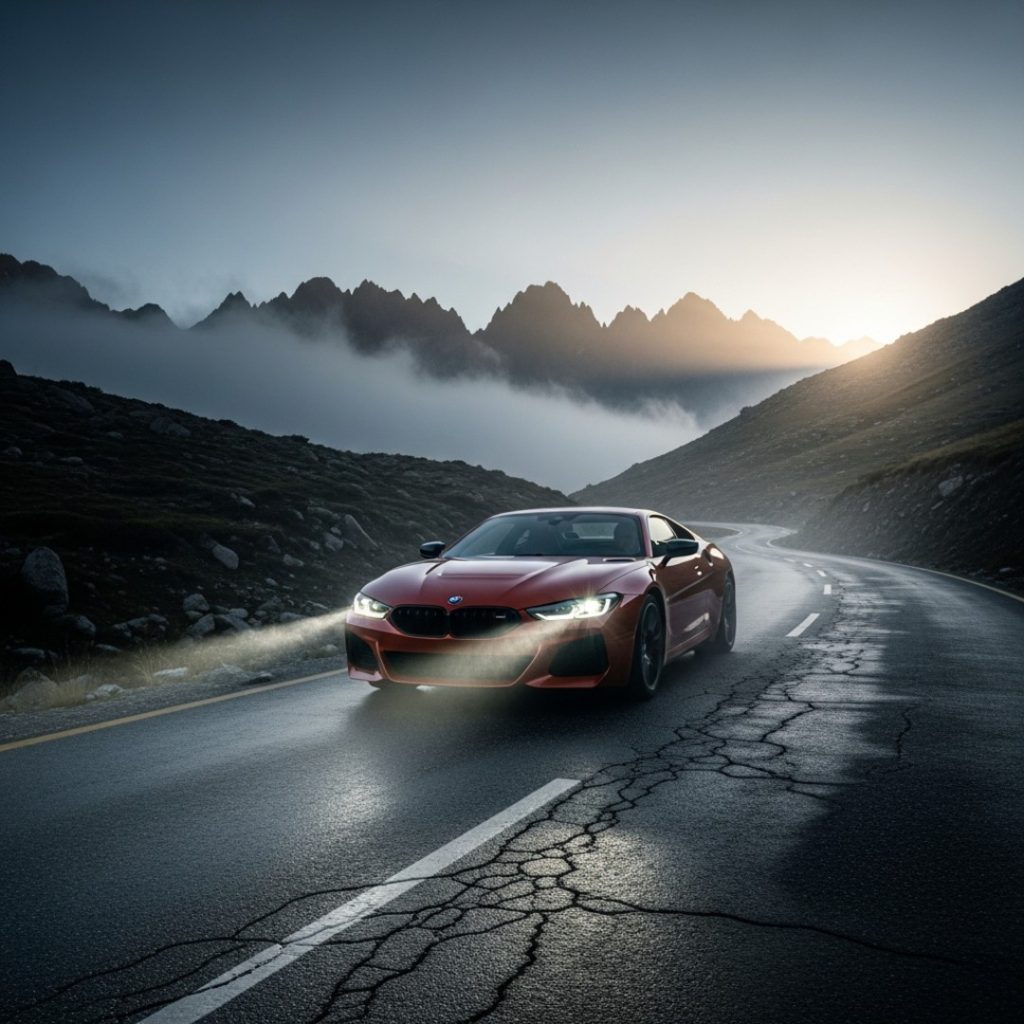
For enthusiasts, the name “M1” is sacred. It was the mid-engined masterpiece that birthed the M Division in 1978. Now, the rumors have finally coalesced into reality. The BMW M1 2026 isn’t just a tribute; it’s a technological warhead aimed directly at the heart of the supercar elite.
With an expected global starting price of roughly ₹1.8 Crore ($225,000)—which could easily touch ₹3.5 Crore+ on-road in India after import duties—this is BMW’s first dedicated mid-engine flagship since the i8. But unlike the i8, this is a pure-bred monster.
3. QUICK SPECS TABLE (Key Highlights)
| Feature | Specification |
| Engine | 4.4L Twin-Turbo V8 with Plug-in Hybrid Motor |
| Power | 750 BHP (Combined System Output) |
| Torque | 850 Nm |
| Transmission | 8-Speed M Steptronic (AWD with Rear Bias) |
| 0-100 kmph | 2.9 Seconds (Claimed) |
| Ground Clearance | 115 mm (Adaptive) |
| Fuel Tank Capacity | 70 Liters |
EXTERIOR DESIGN & ROAD PRESENCE
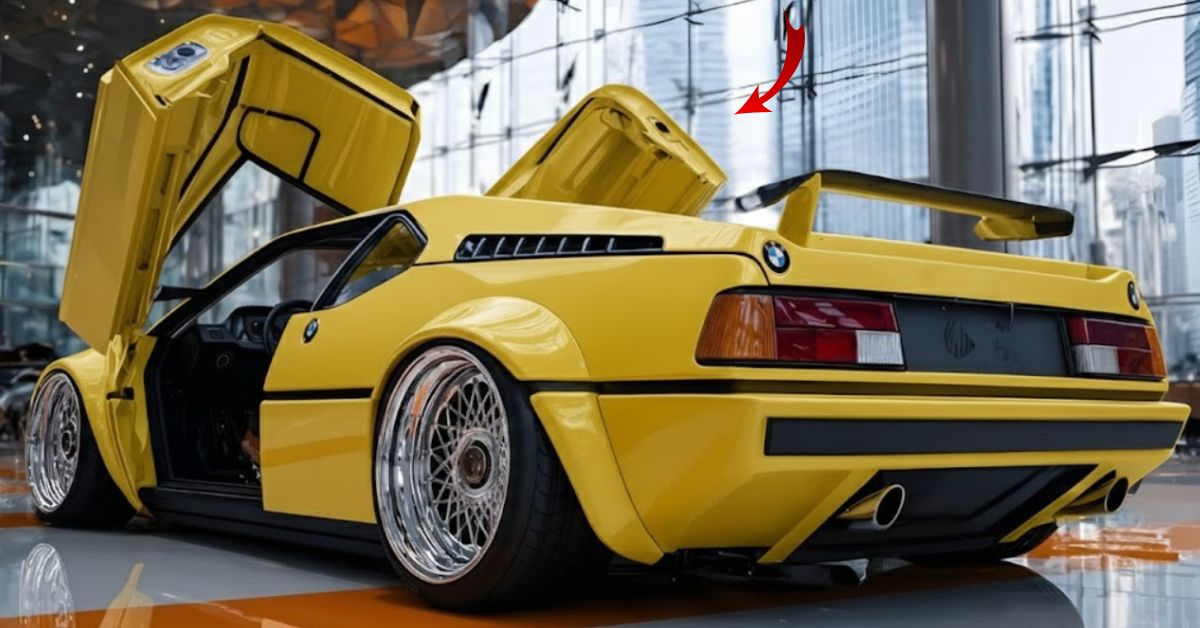
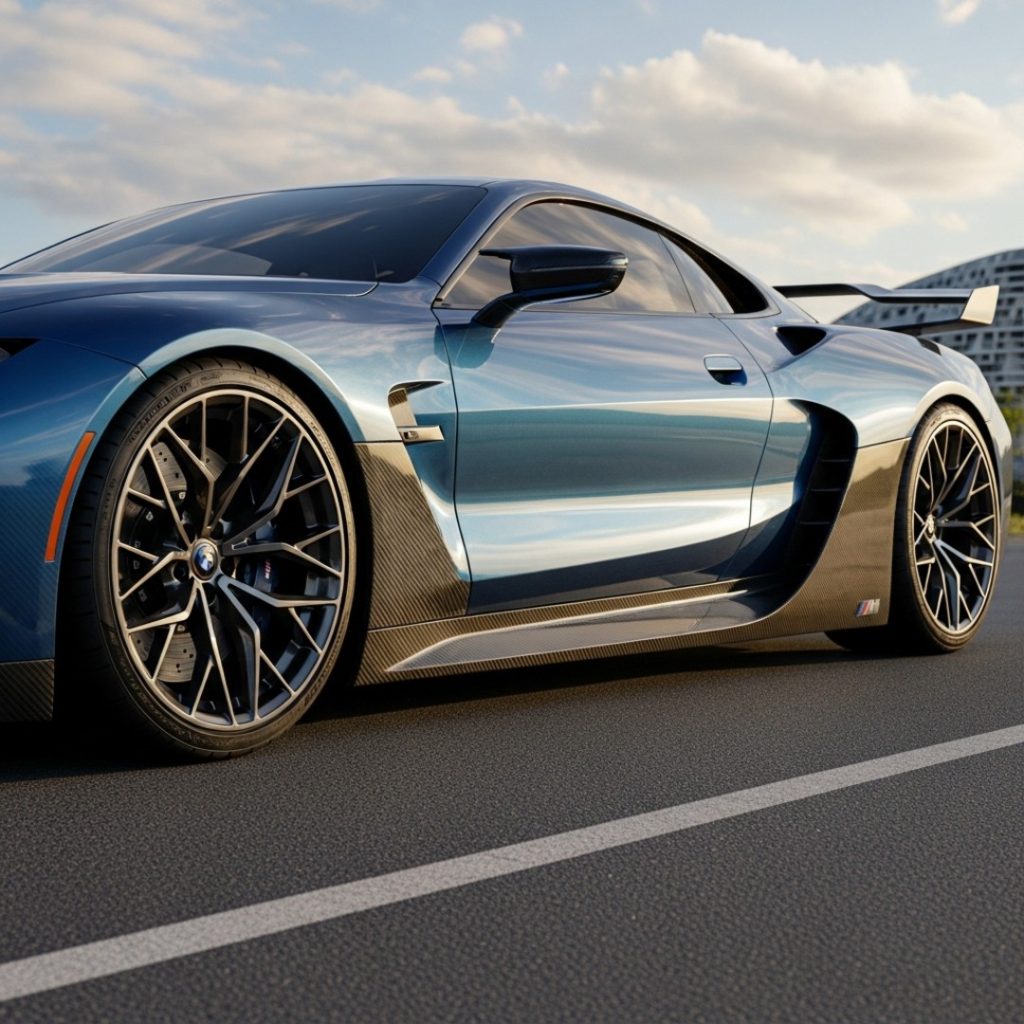
The 2026 BMW M1 is a masterclass in “Functional Aggression.” It manages to look like a spaceship while honoring the original Giorgetto Giugiaro-designed wedge shape.
- The Face: The legendary kidney grille has been reimagined—it’s wide, horizontal, and features active aero shutters. The headlights are laser-thin LED units that give it a predator-like stare.
- The Silhouette: It sits incredibly low to the ground. The carbon-fiber roof and the sweeping side intakes are designed to channel air directly into the mid-mounted V8.
- Wheels: Massive 20-inch front and 21-inch rear forged alloys fill out the flared arches.
- Road Presence: In India, this car won’t just turn heads; it will stop traffic. It has that “poster-car” aura that few modern BMWs currently possess.
INTERIOR, COMFORT & FEATURES
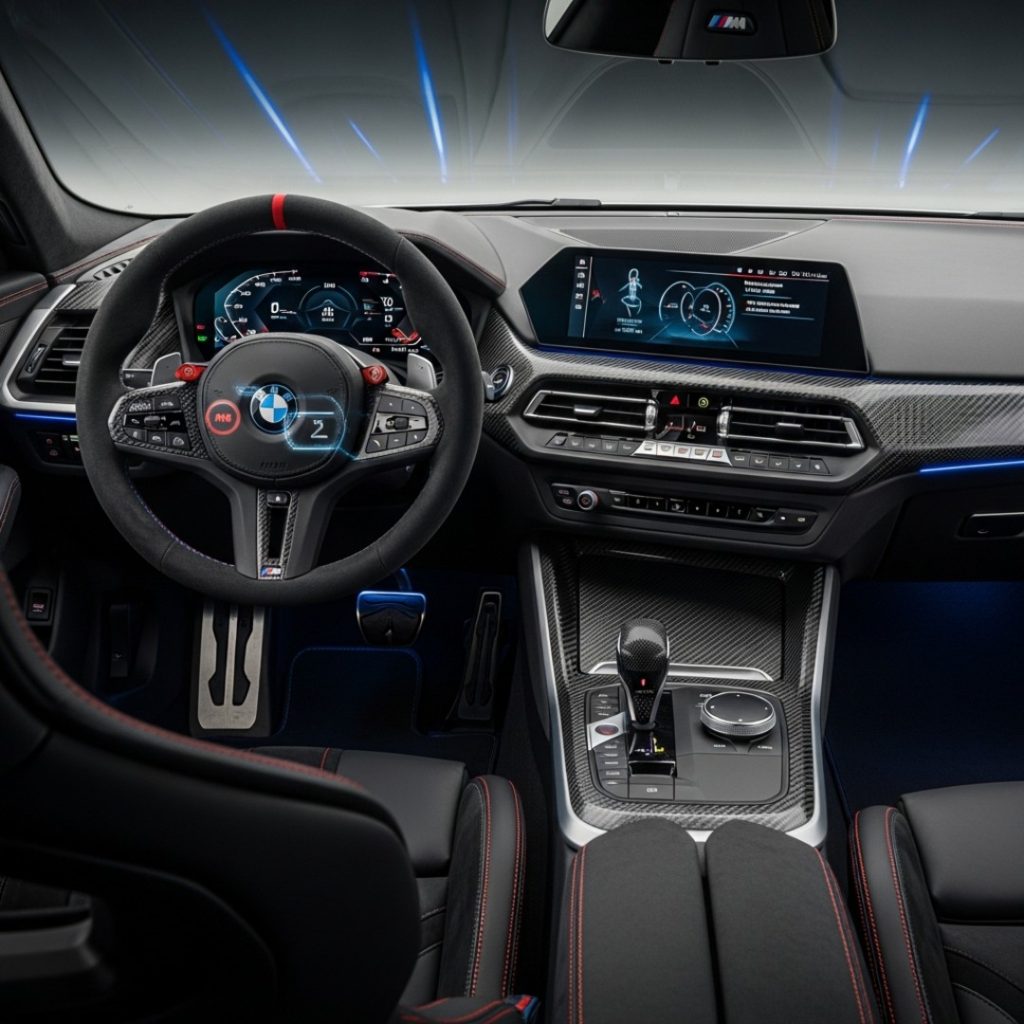
Inside, the M1 2026 shifts away from the “screen-only” trend to a more driver-centric cockpit.
- Dashboard: It features a wrap-around Curved Display, but with tactile, haptic-feedback buttons for critical driving functions. The materials are a mix of Alcantara, lightweight carbon fiber, and Merino leather.
- Space: Being a mid-engine supercar, it’s strictly a 2-seater. Legroom is generous, but the low seating position means ingress and egress will be a workout for your knees.
- Features: * M-Specific HUD: Projecting lap times and G-force meters on the windshield.
- Level 2.5 ADAS: Because even a supercar needs to help you in city traffic.
- Ventilated Bucket Seats: Necessary for long drives in Indian heat.
- Missing: Don’t expect a sunroof—weight saving is the priority here.
ENGINE PERFORMANCE & DRIVING DYNAMICS
This is where the M1 earns its badge. The hybrid powertrain ensures there is zero turbo lag.
- City Drive: In ‘Electric-Only’ mode, the M1 can crawl through Bangalore or Mumbai traffic silently for up to 50 km. The steering is sharp but manageable, and the 360-degree camera is a lifesaver given the poor rear visibility.
- Highway Drive: On a flat stretch like the Samruddhi Mahamarg, the M1 is a cruise missile. Stability at 150 kmph+ is rock solid due to the active rear spoiler and underbody diffuser.
- Suspension: “The suspension absorbs potholes easily” is a relative term here. While it has Adaptive M Suspension, the short travel and low-profile tires mean you’ll feel every sharp edge. It’s built for the track, not for deep craters.
Read more : Tata Punch 2026
SAFETY (Crucial Section)
Supercars today are rolling computers of safety.
- Build: The chassis is a Carbon Core structure (like the 7-series and i8), making it incredibly rigid yet light.
- Braking: Standard Carbon Ceramic Brakes with 6-piston calipers in the front provide enough stopping power to make your eyes pop.
- Airbags: 6 Airbags come standard, including knee airbags for the driver and passenger.
REAL WORLD MILEAGE (The Truth)
No one buys an M1 for mileage, but with the hybrid tech, it’s surprisingly efficient if you’re gentle.
- ARAI Claimed (Estimated): 12 – 14 kmpl (Hybrid cycle).
- Real World City: 5 – 7 kmpl (V8 engaged).
- Real World Highway: 9 – 11 kmpl (Cruising in Efficient mode).
THE COMPETITION
BMW M1 vs Porsche 911 Turbo S vs Ferrari 296 GTB
| Feature | BMW M1 (2026) | Porsche 911 Turbo S | Ferrari 296 GTB |
| Powertrain | 4.4L V8 Hybrid | 3.7L Flat-6 Twin-Turbo | 3.0L V6 Hybrid |
| Power | 750 BHP | 641 BHP | 818 BHP |
| Layout | Mid-Engine | Rear-Engine | Mid-Engine |
| Drive | AWD | AWD | RWD |
| Price (Est. India) | ₹3.50 Cr+ | ₹3.35 Cr+ | ₹5.40 Cr+ |
Winner: For the ultimate everyday supercar, the Porsche is hard to beat. However, for sheer presence and hybrid power-to-weight ratio, the BMW M1 is the new “VFM” (relatively speaking) pick in the elite category.
FINAL VERDICT
The BMW M1 2026 is a statement that BMW hasn’t forgotten how to build a raw driver’s car in the age of boring EVs.
Buy it if:
- You want the absolute pinnacle of BMW performance and heritage.
- You need a supercar that can be driven in “Electric Mode” for short city bursts.
- You want a car that will likely appreciate in value as a collector’s item.
Skip it if:
- You have a bad back—the low ingress/egress is challenging.
- Your local roads have unscientific speed breakers (115mm clearance is risky).
- You prefer the mechanical purity of a non-hybrid naturally aspirated engine.
FAQs (People Also Ask)
Q: What is the expected on-road price of the BMW M1 2026 in India?
A: With a base global price of $225,000, once you add 110% import duty (CBU), GST, and RTO, expect it to land between ₹3.80 Crore and ₹4.20 Crore.
Q: Will there be a CNG option for the BMW M1?
A: No. A 750 BHP supercar engine is not compatible with CNG.
Q: What is the waiting period for the M1?
A: Given it will be a limited-production flagship, expect a waiting period of 12 to 18 months after booking.