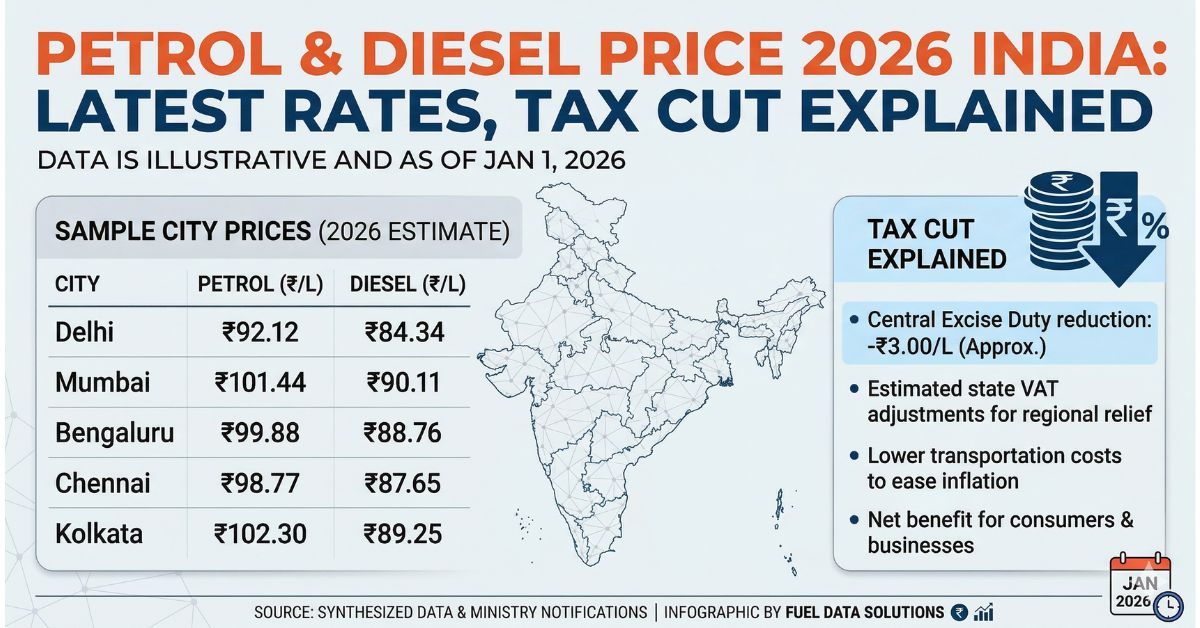
Petrol Diesel Price 2026 India are once again in the spotlight in India in 2026. With global oil markets becoming unstable due to geopolitical tensions, many people are asking a simple question: will petrol and diesel prices increase or decrease?
This article explains the latest updates on petrol and diesel prices in India, why the government has taken action, and what it means for common people.
What Happened to Petrol Diesel Price 2026 India ?
As of March 2026, petrol and diesel prices in India have largely remained unchanged in major cities despite global oil prices rising sharply.
For example:
- Petrol in Delhi is around ₹94–95 per litre
- Diesel in Delhi is around ₹87–88 per litre
- Mumbai and southern cities continue to have higher rates due to taxes
At the same time, private companies like Nayara Energy have increased prices slightly, showing pressure in the market.
Why Did the Government Cut Excise Duty?
The central government reduced excise duty on fuel in March 2026.
- Petrol excise duty reduced to about ₹3 per litre
- Diesel excise duty reduced to zero
Main reason behind this move
Global crude oil prices have crossed $100 per barrel due to tensions in the Middle East, especially the conflict involving Iran.
This situation created a risk of a sharp increase in fuel prices in India.
Will Petrol and Diesel Prices Go Down?
This is the biggest question for consumers.
The answer: Prices may not decrease immediately.
Even after the tax cut, fuel prices at petrol pumps have mostly stayed the same.
Why prices are not falling
- Oil companies are facing heavy losses due to high global crude prices
- The tax cut is being used to balance those losses
- Without the cut, petrol and diesel prices could have increased by ₹20–₹30 per litre
So, the government’s aim is to prevent a price hike, not reduce prices.
Global Crisis Impact on Petrol Diesel Price 2026 India
The biggest factor behind fuel prices in 2026 is global geopolitics.
- Oil supply has been disrupted due to Middle East conflict
- The Strait of Hormuz, a key oil route, is under pressure
- Nearly 40% of India’s oil imports pass through this route
Because India imports most of its crude oil, any global disruption directly affects fuel prices in the country.
How Fuel Prices Affect Common People
Petrol and diesel prices impact daily life in many ways:
- Transport costs increase
- Food prices may rise due to higher logistics costs
- Inflation pressure grows across sectors
That is why the government tries to keep fuel prices stable, especially during global crises.
Current Situation in Indian Cities
Prices vary depending on state taxes and transport costs.
- Delhi: Petrol ~₹94.7, Diesel ~₹87.6
- Mumbai: Petrol above ₹103, Diesel around ₹90
- Hyderabad: Among the highest, crossing ₹107 petrol
States add VAT (tax), which causes price differences across cities.
Read More : Royal Enfield Guerrilla 450 Update 2026: Launch Date, Features, Price in India
What Happens Next?
The future of petrol and diesel prices in India depends on:
- Global crude oil prices
- Geopolitical situation in the Middle East
- Government tax policies
- Rupee vs dollar exchange rate
If crude oil prices continue to rise sharply, India may face pressure to increase fuel prices despite current efforts.
Key Takeaways
- Fuel prices in India are currently stable but under pressure
- Government has cut excise duty to prevent a sharp rise
- Prices are unlikely to fall immediately
- Global oil market conditions will decide future trends
FAQs(Petrol Diesel Price 2026 India)
1. What is the petrol price in India in 2026?
Petrol prices vary by city but are around ₹94–₹105 per litre in major cities.
2. Has diesel become cheaper after the tax cut?
Diesel excise duty has been removed, but retail prices have mostly remained unchanged.
3. Why are fuel prices not decreasing?
The tax cut is being used to offset rising crude oil costs, not to reduce prices.
4. Will petrol prices increase in 2026?
It depends on global crude oil prices. If they rise further, prices may increase.
5. Why are petrol prices different in each city?
State taxes (VAT), transport costs, and local factors affect fuel prices.