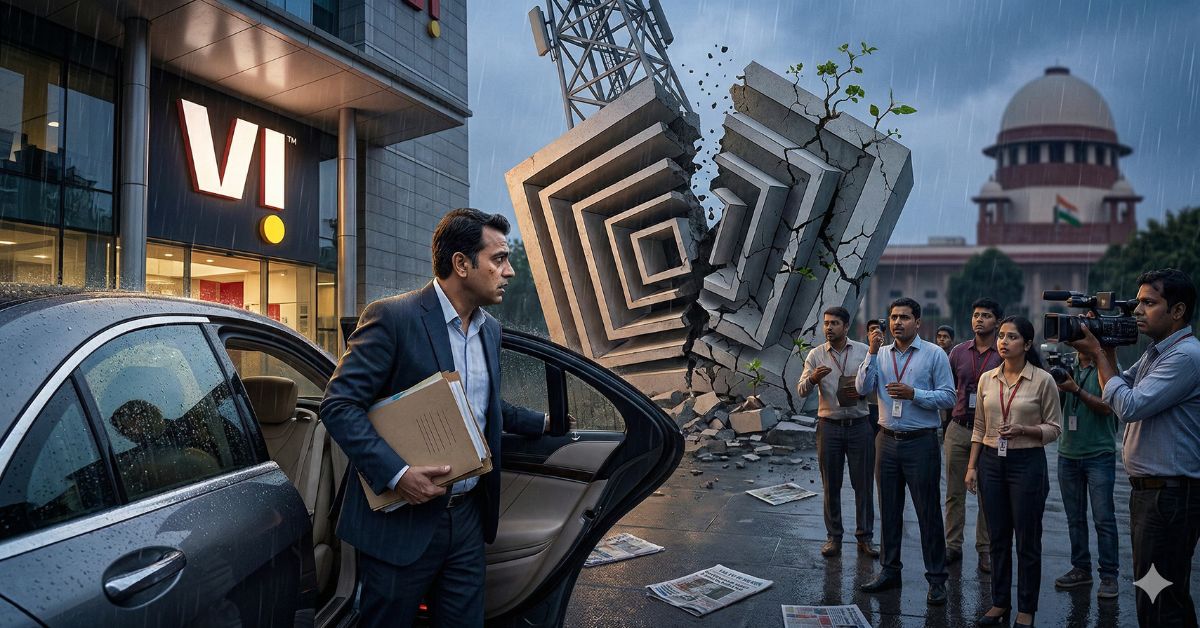
Vodafone Idea (Vi) has once again become a hot topic in India’s telecom industry. The company is facing massive financial pressure, especially due to Adjusted Gross Revenue (AGR) dues running into tens of thousands of crores. With reports highlighting an ₹87,000 crore AGR shock, many are asking a serious question: Is Vodafone Idea heading for a comeback or moving closer to collapse?
In this article, we break down what happened, why the AGR issue matters, how it impacts Vodafone Idea, and what lies ahead for the company and India’s telecom sector.
What Is the AGR Issue?
AGR stands for Adjusted Gross Revenue. It is the revenue on which telecom companies in India pay license fees and spectrum usage charges to the government.
The dispute started years ago when telecom companies and the Department of Telecommunications (DoT) disagreed on what should be included in AGR. Telecom firms believed AGR should include only core telecom revenue. However, the government argued that it should include all revenue, including non-telecom income like rent, interest, and asset sales.
In 2019, the Supreme Court ruled in favor of the government. This decision forced telecom companies to pay massive pending dues along with interest and penalties. For Vodafone Idea, this became a financial earthquake.
How Big Is Vodafone Idea’s AGR Burden?
Vodafone Idea’s AGR dues have been estimated at over ₹80,000 crore at various stages, depending on interest and penalty calculations. When combined with spectrum liabilities and other debt, the company’s total debt burden crosses ₹2 lakh crore.
The ₹87,000 crore figure often mentioned reflects AGR-related liabilities including interest and penalties over the years. Exact numbers vary based on updated filings and government calculations.
This amount is extremely large for a company that is already struggling with losses, falling subscriber base, and intense competition from Reliance Jio and Bharti Airtel.
Simply put, the AGR shock has pushed Vodafone Idea to the edge.
Why Vodafone Idea Is Financially Stressed
Vodafone Idea was formed in 2018 after the merger of Vodafone India and Idea Cellular. The merger was meant to create a strong competitor against Jio. But instead of becoming stronger, the company faced multiple problems.
First, intense price competition reduced average revenue per user (ARPU). Jio’s aggressive pricing strategy forced all operators to cut tariffs.
Second, heavy debt made it difficult for Vi to invest in network upgrades, especially 4G expansion and now 5G rollout.
Third, continuous subscriber losses weakened revenue further. Many users shifted to better network providers.
The AGR judgment acted like the final blow in an already tough situation.
Government Relief Measures: A Lifeline?
To prevent a telecom crisis, the Indian government introduced relief packages in 2021 and later years. These included:
– A four-year moratorium on AGR and spectrum payments
– Option to convert interest dues into government equity
– Longer repayment timelines
In 2023, the government converted part of Vodafone Idea’s dues into equity, becoming one of the largest shareholders in the company. This move reduced immediate cash pressure on Vi.
However, relief does not mean the problem is solved. Payments will restart after the moratorium period ends. The debt has not disappeared; it has only been delayed.
The ₹18,000 Crore Fundraising Boost
In April 2024, Vodafone Idea raised around ₹18,000 crore through a Follow-on Public Offer (FPO), one of the largest in India. This was seen as a positive development.
The company said the funds would be used for:
– Expanding 4G network
– Rolling out 5G services
– Paying vendors
– Strengthening operations
This fundraising improved market sentiment temporarily. Investors saw it as a sign that the company is trying to fight back.
But when compared to total liabilities of over ₹2 lakh crore, ₹18,000 crore is just a part of the larger problem.
Is Vodafone Idea Launching 5G?
While Jio and Airtel have already launched 5G services across major cities in India, Vodafone Idea has been slower.
Vi has stated that it plans a phased 5G rollout. However, launching and expanding 5G requires heavy capital investment. Given its financial stress, Vi must carefully manage funds.
If the company delays 5G further, it risks losing high-paying customers to competitors. On the other hand, aggressive spending without stable revenue could increase financial pressure.
This is a difficult balancing act.
Subscriber Losses: A Major Warning Sign
One of the biggest concerns for Vodafone Idea is the continuous decline in subscribers.
Over the past few years, the company has been losing millions of users each quarter. Many customers shifted to Airtel or Jio due to better coverage and faster internet.
Lower subscriber base means lower revenue. Lower revenue means less ability to invest in network upgrades. This creates a negative cycle.
However, recent tariff hikes across the telecom sector may help improve ARPU for all players, including Vi. Higher ARPU can strengthen cash flow if subscriber losses are controlled.
Market Position: Can India Afford Only Two Telecom Players?
India currently has three private telecom operators: Reliance Jio, Bharti Airtel, and Vodafone Idea. There is also BSNL, a government-owned operator.
If Vodafone Idea collapses, the market could effectively become a two-player private market. This may reduce competition and could lead to higher tariffs in the long term.
Many experts believe the government does not want Vodafone Idea to fail completely because a healthy three-player market ensures competition and consumer benefit.
This strategic importance may increase the chances of continued policy support.
Impact on Customers in India
For customers, Vodafone Idea’s situation raises concerns about:
– Network quality
– Future tariff increases
– Long-term service stability
So far, services continue without disruption. The company remains operational across India.
However, in areas where Vi has limited investment, users may experience weaker network performance compared to competitors.
If Vi successfully invests in 4G and 5G expansion, customers may benefit from better competition and more stable pricing in the market.
Impact on Investors and Stock Market
Vodafone Idea shares have been highly volatile. News related to AGR dues, government support, fundraising, or subscriber numbers often causes sharp movements in stock price.
Retail investors are divided. Some see Vi as a turnaround story with high risk but high reward. Others see it as financially too stressed to survive long term.
The company’s future depends heavily on:
– Revenue growth
– Successful 5G rollout
– Ability to reduce debt
– Policy support
Without strong improvement in cash flow, investor confidence may weaken again.
What Happens When Moratorium Ends?
The relief package provided a moratorium on AGR and spectrum payments for four years. Once this period ends, Vodafone Idea will need to start paying significant annual amounts to the government.
This is one of the biggest future risks.
If the company’s financial position improves by then, it may manage payments smoothly. But if revenue growth remains slow, repayment could become a serious challenge.
This timeline is critical in deciding whether Vodafone Idea makes a comeback or faces deeper trouble.
Comeback Scenario: What Needs to Go Right?
For Vodafone Idea to stage a comeback, several things must align:
Revenue must increase through higher ARPU and stable subscriber base.
Network quality must improve to compete with Airtel and Jio.
5G rollout should attract premium customers.
Debt restructuring or further support may be needed.
If these conditions are met, Vi could slowly rebuild trust in the market.
Telecom is a long-term business. With the right strategy, recovery is possible — but it requires strong execution.
Collapse Scenario: What Could Go Wrong?
On the other hand, risks remain high.
If subscriber losses continue, revenue will shrink further.
If 5G rollout is delayed significantly, high-value customers may leave.
If lenders lose confidence, funding may become difficult.
If AGR payments restart without adequate cash flow, financial stress could increase sharply.
In such a case, the company may face restructuring, merger, or asset sale discussions.
Why This Case Study Matters for India
The Vodafone Idea story is more than just a corporate struggle. It reflects:
– The impact of regulatory decisions on business stability
– The importance of financial discipline in high-capex industries
– The balance between competition and survival in telecom
The AGR judgment has changed the telecom landscape permanently. It has shown how legal interpretation can reshape entire industries.
For policymakers, investors, and consumers, Vodafone Idea remains a key case study in India’s economic and regulatory system.
What’s Next for Vodafone Idea?
In the coming months, the focus will remain on:
– 5G rollout announcements
– Subscriber trends
– Revenue growth
– Any fresh government or court developments
The company continues to state that it is committed to long-term operations in India. However, the real test will be execution and financial discipline.
For now, Vodafone Idea is not collapsed — but it is definitely under pressure.
The final outcome depends on how effectively it manages debt, strengthens network quality, and restores consumer confidence.
Conclusion
Vodafone Idea stands at a critical crossroads. The ₹87,000 crore AGR shock has placed immense financial stress on the company. While government relief and recent fundraising provide breathing space, long-term survival depends on strong revenue growth, network investment, and strategic planning.
The telecom sector in India is too important to ignore. A three-player market benefits consumers and ensures healthy competition. Whether Vodafone Idea can transform from a struggling operator into a stable competitor remains one of the most important business stories in India today.
The next few years will decide whether this becomes a comeback story — or a cautionary tale.
FAQs
1. What is Vodafone Idea’s AGR dues?
Vodafone Idea’s AGR dues are estimated at over ₹80,000 crore including interest and penalties, though exact figures change based on government calculations and filings.
2. Has the government helped Vodafone Idea?
Yes, the government provided a moratorium on payments and converted part of the dues into equity, becoming a major shareholder.
3. Is Vodafone Idea shutting down?
No, Vodafone Idea continues to operate across India. However, it faces financial challenges.
4. Did Vodafone Idea raise funds recently?
Yes, the company raised around ₹18,000 crore through a Follow-on Public Offer in 2024 to support network expansion and operations.
5. Will Vodafone Idea launch 5G in India?
The company has announced plans for phased 5G rollout, but expansion depends on financial stability and investment capacity.