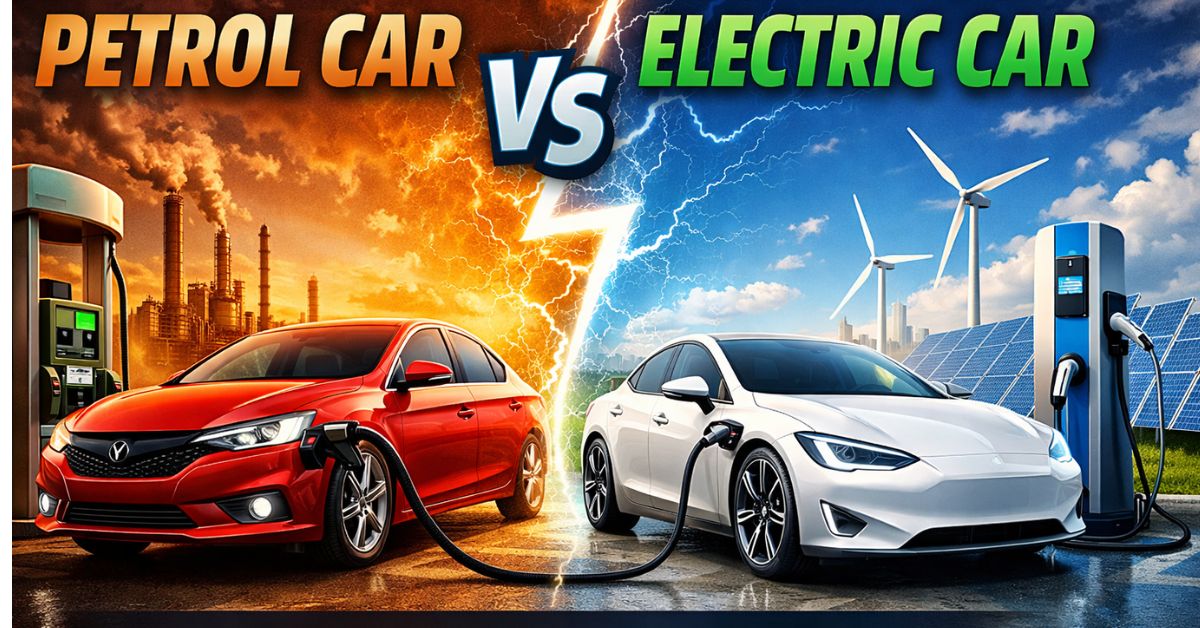
The Indian automobile market is going through a massive shift. A few years ago, the only real debate was between petrol and diesel. Today, the conversation has completely changed. Buyers are now faced with a much bigger question: should you stick with a traditional petrol car, or is it time to switch to an electric vehicle? Buying a car is a long-term financial commitment, and nobody wants to invest in outdated technology. This article will break down the true cost of ownership, practical challenges, government policies, and future trends to help you understand which technology is actually built for the future of Indian roads.
The Current Scenario of Mobility in India
Right now, petrol cars still rule the roads in India. They offer peace of mind, a massive network of fuel stations, and a lower entry price for budget-conscious buyers. You can take a petrol car anywhere in the country without planning your stops around charging stations.
However, electric cars are no longer just an experiment. In cities across India, EVs have become a mainstream choice for daily commuting. Major automakers have launched practical electric vehicles that offer good range and comfort. While EVs still make up a smaller percentage of total car sales compared to petrol, their growth is accelerating fast, driven by rising fuel prices and a growing awareness of air pollution.
Upfront Price versus Total Cost of Ownership
When you walk into a showroom, a petrol car will almost always look cheaper. Electric cars carry a higher initial price tag, mainly because of the high cost of battery packs. For many middle-class Indian families, this upfront cost is the biggest barrier to buying an EV.
But looking only at the showroom price is a mistake. The true financial picture becomes clear when you calculate the total cost of ownership over five to eight years. Petrol prices in India remain high, pushing the running cost of a standard petrol car to around six to eight rupees per kilometre. In contrast, charging an EV at home brings the running cost down to just one or two rupees per kilometre.
Running and Maintenance Costs
Maintenance is another area where electric technology wins. Petrol engines have hundreds of moving parts, requiring regular oil changes, filter replacements, and engine tuning. Electric vehicles have far fewer moving parts. They do not need engine oil, spark plugs, or complex exhaust systems, which drastically reduces your annual service bills. Over a period of five years, an EV owner can save lakhs of rupees on fuel and maintenance, completely recovering the higher initial purchase price.
Charging Infrastructure and Everyday Practicality
The biggest advantage of a petrol car is convenience. Refuelling takes five minutes, and petrol pumps are available in every corner of India. This makes petrol cars the undisputed choice for people who frequently drive long distances on unpredictable routes.
Electric vehicles require a change in habit. Instead of visiting a fuel station, EV owners must treat their car like a smartphone, plugging it in at home overnight. For city dwellers who drive a fixed distance to work every day, home charging is extremely convenient. You wake up every morning with a full battery.
Public charging infrastructure in India is growing quickly on major highways and in metro cities, but it is still not perfect. Long road trips in an EV require careful planning to ensure you can find a fast charger along the way. If you live in an apartment complex without dedicated parking or reliable electricity, owning an EV can still be a challenging experience.
The Ethanol Factor: Are Petrol Cars Losing Their Edge?
One of the most overlooked factors in the petrol versus EV debate is the changing nature of petrol itself. The Indian government is heavily pushing for ethanol blending in petrol to reduce import costs and cut emissions. Currently, E20 petrol, which contains 20% ethanol, is being sold at fuel stations. There are already discussions about moving to E27 blends in the near future.
Older petrol cars, and even some current models, are not fully optimized for high ethanol blends. Using highly blended fuel can lead to engine wear, damaged fuel lines, and reduced fuel efficiency. Additionally, strict government regulations like the ten and fifteen-year scrappage rules in regions like Delhi NCR make owning an internal combustion engine car a long-term risk. These regulations heavily impact the future resale value of petrol cars.
Government Support and Environmental Impact
Electric vehicles receive massive support from both central and state governments in India. To encourage adoption, the GST on electric cars is set at just 5%, compared to 28% plus heavy cesses on petrol cars. Many states also offer waivers on road tax and registration fees for EVs, which helps bridge the gap in the on-road price.
From an environmental standpoint, EVs produce zero tailpipe emissions. While it is true that a lot of India’s electricity is still generated from coal, driving an EV in crowded cities instantly reduces local air pollution and noise levels. As India continues to increase its renewable energy capacity, electric cars will only become greener over time.
The Final Verdict: Which Technology is Truly Future-Proof?
If we look strictly at future readiness, electric technology is clearly the path forward. Automakers are pouring all their research and development money into batteries and software, while petrol engine development has largely slowed down. With tightening emission norms, rising fuel costs, and aggressive government push, electric cars represent the future of mobility in India.
Read More : Tata Punch EV Facelift On Road Price in India
However, the best choice for you today depends entirely on your usage. If you drive more than forty kilometres a day, live in a city, and have a dedicated parking spot with a plug point, an electric car is a future-proof investment that will save you a lot of money. On the other hand, if your budget is tight, you frequently travel between cities, or you lack home charging, a petrol car remains the most practical choice for the next few years.
Frequently Asked Questions (FAQs)
Are electric cars really cheaper to run than petrol cars in India?
Yes, electric cars are significantly cheaper to run. While a petrol car may cost around seven rupees per kilometre in fuel, an electric car charged at home costs only about one to two rupees per kilometre.
Will petrol cars be banned in India soon?
There is no official plan to completely ban petrol cars in India anytime soon. However, older petrol cars are facing strict usage limits in cities like Delhi, and future emission norms will make new petrol cars more expensive to buy and maintain.
How long does an electric car battery last?
Modern EV batteries are designed to last a very long time. Most car manufacturers in India offer an eight-year or 1,60,000-kilometre warranty on the battery pack, giving buyers long-term peace of mind.
Is it difficult to find EV charging stations on Indian highways?
The charging network is growing rapidly. Most major highways connecting big cities now have fast chargers. However, you still need to plan your route in advance using smartphone apps, as the network is not as widespread as petrol pumps.
Do petrol cars have a better resale value than EVs?
Currently, petrol cars often hold their value better because the used EV market is still very new and buyers are sometimes worried about battery degradation. However, as EV technology becomes more common, their resale value is expected to improve steadily.